Water and Sewage in Dream City: Wells, Pumps and Towers
Every home in Dream City needs water, and every growing town needs sewage. Here's how wells, pumps, water towers and sewage fit together, and how to plan them as your settlement grows.
Roads get the attention, but water keeps a city alive. In Omebly Dream City, homes need water, and a growing town needs sewage. Get it right and you’ll barely think about it. Get it wrong and new neighbourhoods stall. This guide covers Dream City water and sewage: what each building is for, and how to plan a system that grows with your city.
For the big picture of the game, see the main Dream City guide. Here we focus on one system in depth.
Quick answer: Dream City’s water system uses wells, pumps and water towers, plus sewage. Plan water at the same time as your roads and zones, extend it to every new street, and keep sewage away from homes. Start small with what suits your stage, expand as population grows, and check the Budget before each new building in Career mode.
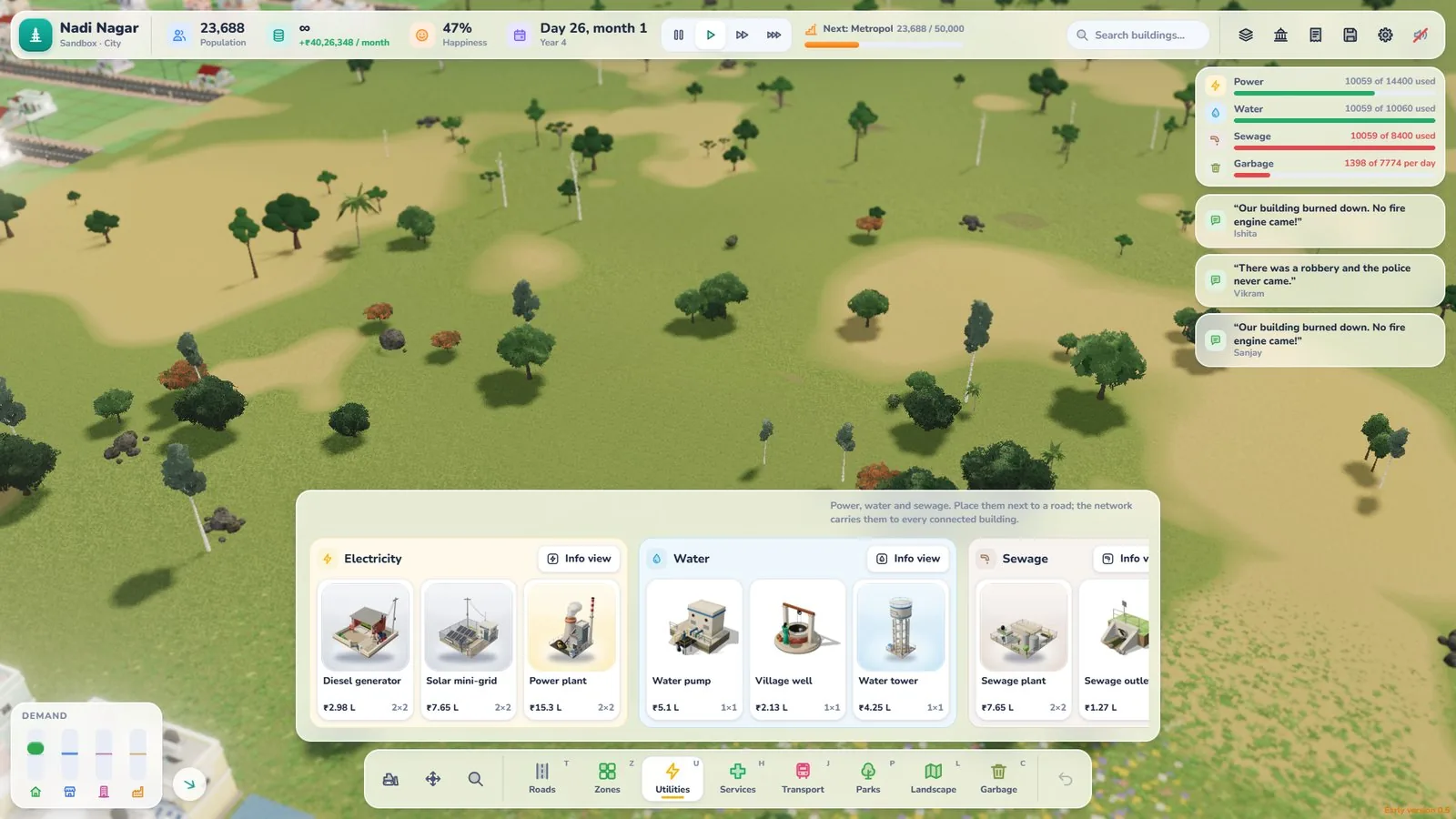
The water buildings
Dream City gives you a small, clear set of water and waste-water buildings:
| Building | Role |
|---|---|
| Village well | Water source for a young settlement |
| Water pump | Water source; needs a river or lake |
| Water tower | Stores water from a well or pump |
| Sewage plant and outlet | Handling waste water |
Exactly which buildings you can place depends on your growth stage, since each stage unlocks new buildings. Asha’s tips show you how to get water to your first homes, so follow her lead at the start.
Why water planning matters
Homes need the basics
Zones grow from huts into houses, apartments and high-rises as an area improves. A street without water is a street that won’t thrive. Every time you lay new road and zone new homes, water should follow.
Growth multiplies demand
Your town grows from Settlement to Hamlet at 100 people, Village at 500, Town at 2,500, City at 10,000 and Metropolis at 50,000. Each step means many more homes needing water. A system built for a hamlet won’t serve a town.
Step-by-step: planning water as you grow
Step 1: Start with your first homes
Follow Asha’s tips to get water to your first block. Keep it simple. A young settlement needs a modest supply, not a citywide network.
Step 2: Water with every new street
Make it a habit: new road, new zone, then water. Don’t wait for residents to complain. If you plan water at the same time as roads, you’ll never have a forgotten corner.
Step 3: Expand before you’re stretched
When you see a growth stage coming, plan extra supply in advance. Adding pumps, plus water towers to store their water, in good time means new streets are never left waiting.
Step 4: Add sewage as the town grows
More homes mean more waste water. Add sewage as your town grows, and place it with care (see below).
Step 5: Review regularly
Every so often, look over your city and ask: does every neighbourhood have water? Is sewage keeping up? Are there new districts that missed out?
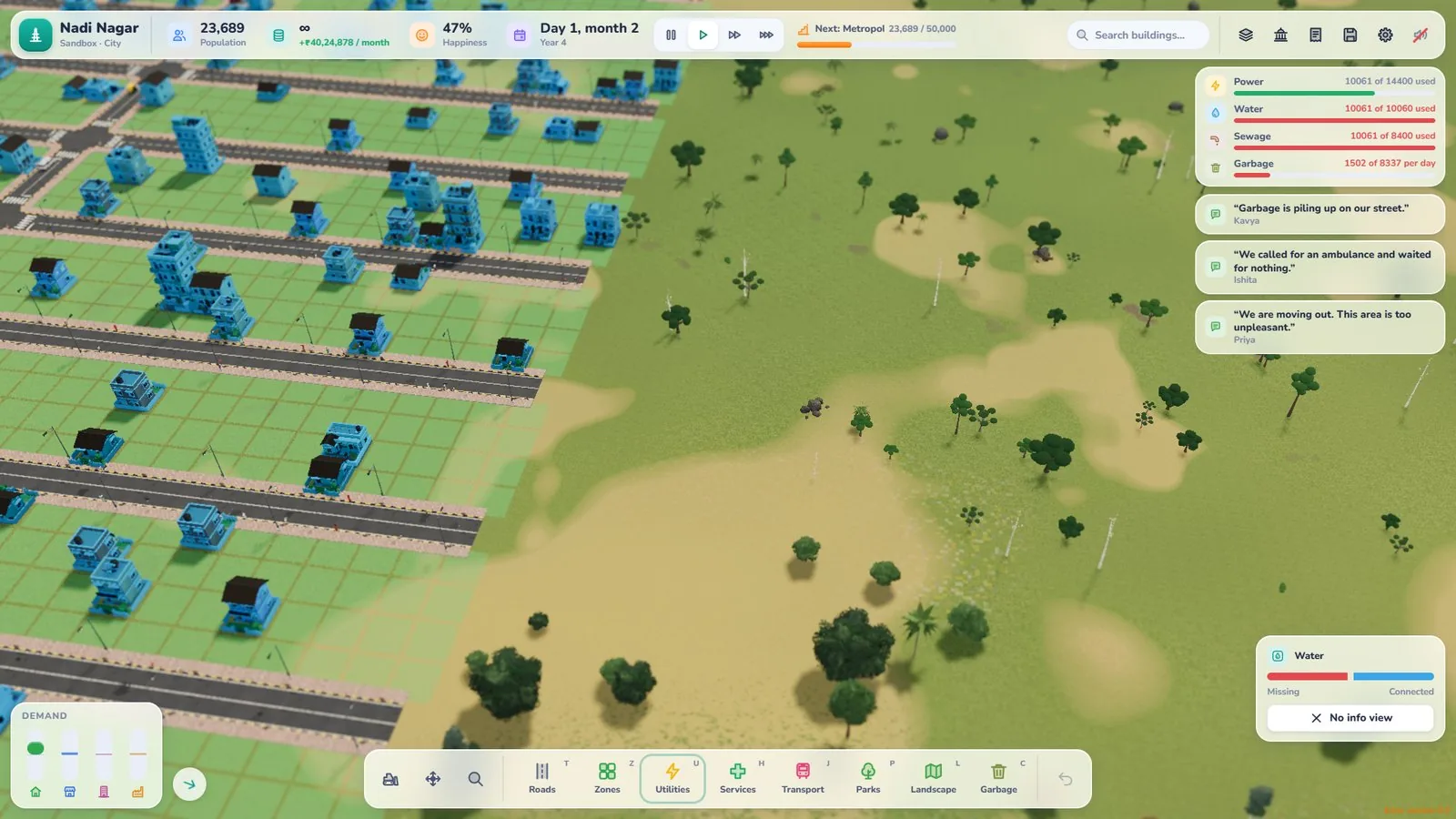
Where to place water buildings
Use the land
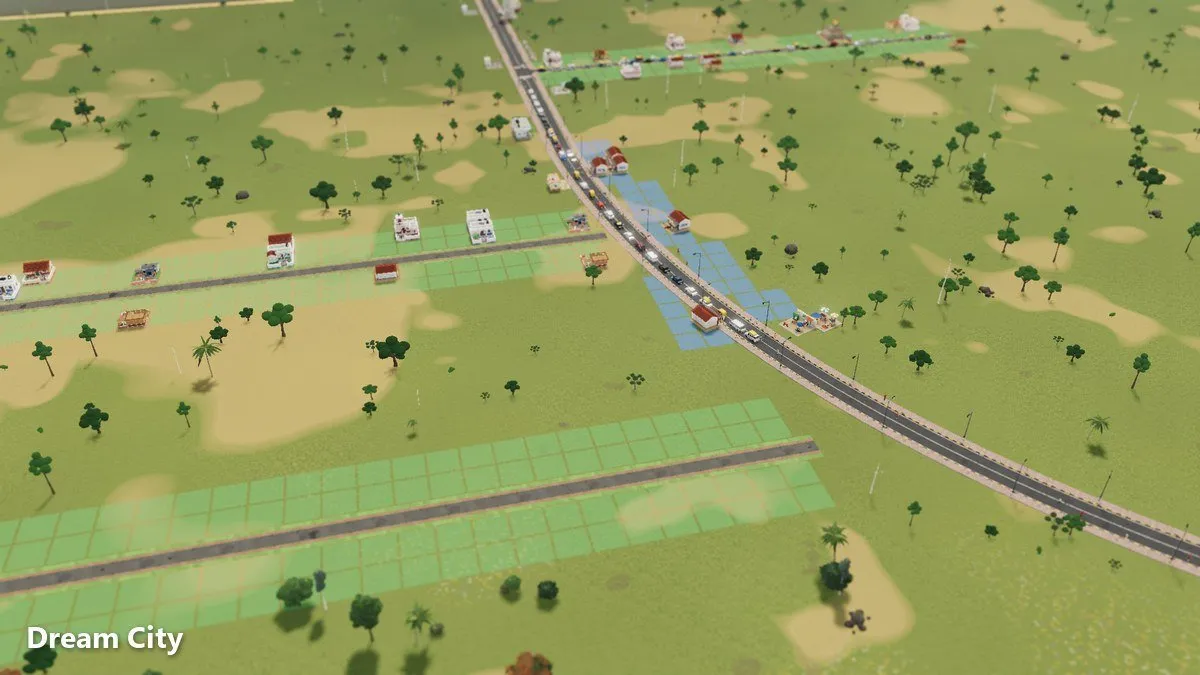
Dream City has rivers, ponds and hills, and you can raise and lower land. Water buildings near rivers and ponds look natural and make your layout easy to read.
Water towers as landmarks
A water tower is a classic sight in a growing Indian town. Place one where it can serve a cluster of homes, and it doubles as a landmark for screenshots.
Leave room to grow
Don’t box your water buildings in with homes. Leave space around them so you can add more as demand grows.
Check from street level
Once a neighbourhood is built, drop the camera to street level and follow a resident through their day. It’s an easy way to see your city as the people living in it do, and to notice a street you forgot to plan for.
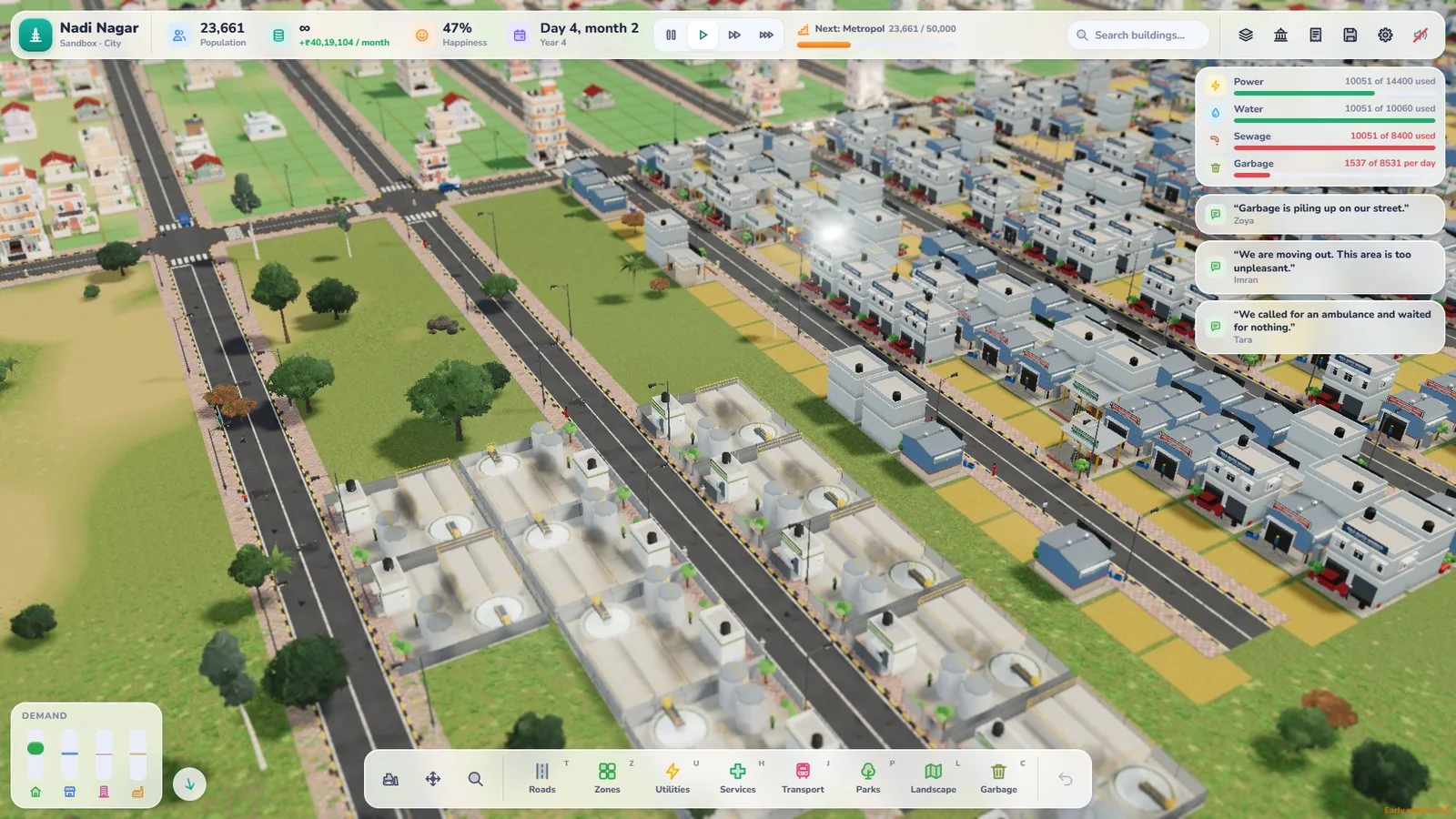
Where to place sewage
Sewage handles your town’s waste water, and you don’t want it next to people’s front doors.
- Keep it away from homes. Put it at the edge of town or near work areas.
- Keep supply and sewage apart. Separate where you place water supply from where you place sewage, so your layout stays clean and logical.
- Plan for expansion. A growing city needs more sewage capacity over time, so leave room.
Water and the wider utility picture
Water is one part of your utilities. You’ll also manage:
- Power: a power plant, diesel generator or solar mini-grid
- Waste: garbage points and collection, recycling and a landfill
Think in utility corridors
Group utility buildings sensibly. A strip of land at the edge of a neighbourhood can host water, power and waste without crowding homes.
Watch for pollution
Pollution drifts with the wind. A diesel generator is cheap to build but pollutes and costs more to run. A solar mini-grid costs more to build but has very low upkeep and makes no pollution. Keep polluting buildings away from homes and think about which way the wind carries it.
Water and your budget
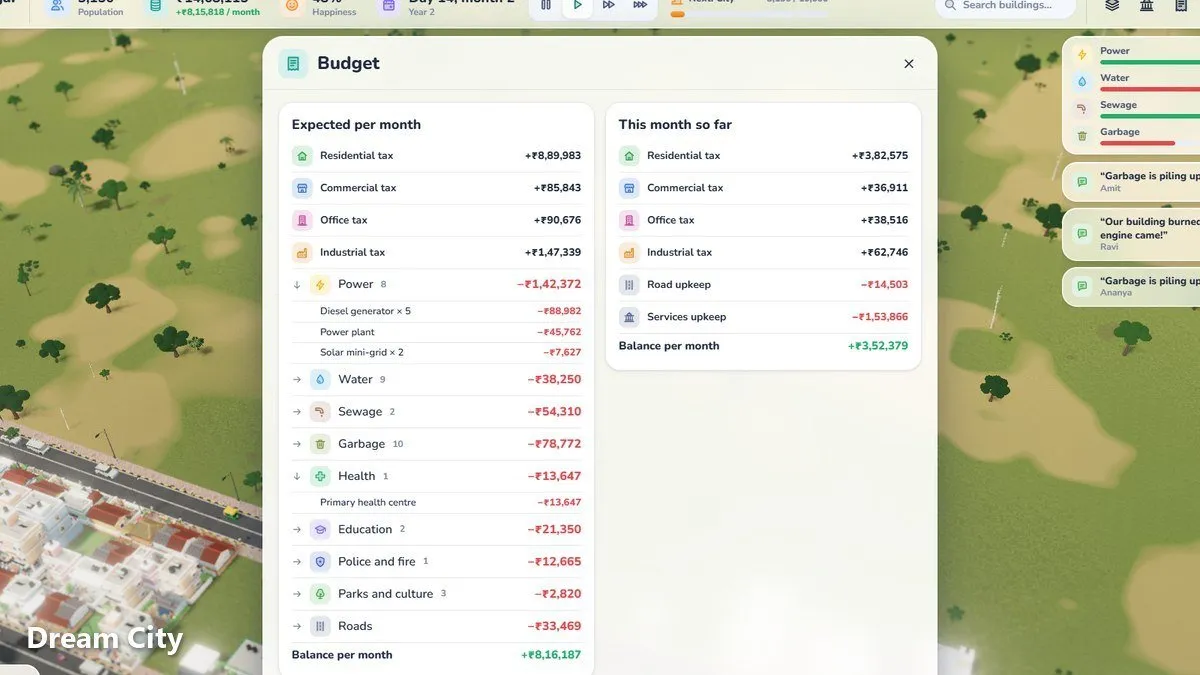
In Career mode, every building costs money. The Budget groups your monthly costs by department, and each group shows every kind of building, how many you have and what they cost. Services cost more as they get busier, and wages rise as the town grows.
Budget-friendly water tips
- Build what you need now, and expand in steps.
- Check the Budget before each new water or sewage building.
- Don’t over-build for the future. Plan space for it, but spend when growth arrives.
Our Dream City budget guide explains how to keep the whole city in profit.
Signs your water system needs attention
- A new neighbourhood isn’t growing. Check it has water.
- Residents are unhappy. They speak their mind, so listen to what they say.
- You’ve just reached a new stage. More people usually means more demand.
- You’ve bought new land in Career mode. New plots need their own supply.
Common water mistakes
- Building homes first and water later
- Packing water buildings tightly between houses with no room to grow
- Placing sewage beside homes
- Forgetting sewage entirely as the town grows
- Overspending on water capacity long before you need it
Your water and sewage checklist
- Water connected to every street
- Supply expanded ahead of each growth stage
- Sewage placed away from homes
- Space left around utilities to expand
- Budget checked before each purchase
The jump from Hamlet to Village is where many towns first feel water pressure. Our guide to growing a Hamlet into a Village shows how water fits into the rest of your growth plan.
Open Dream City and give every street the water it needs.
Frequently asked questions
What water buildings are in Dream City?
Dream City has wells, pumps and water towers for water supply, plus sewage.
When should I plan water?
Plan water at the same time as roads and zones. New homes need the basics, so extend water to every new street as you build it.
Where should I put sewage?
Keep sewage away from homes and near the edge of town where you can, and leave room to expand it as the city grows.
Does water cost money to run?
In Career mode every building has a cost, and the Budget groups monthly costs by department, showing each kind of building and what it costs. Check it before adding new water and sewage buildings.
Are wells, pumps and towers in Sandbox too?
Yes. Both modes use the same buildings. In Sandbox you have unlimited money, so it's a good place to practise a water layout.

Written by
Nazmul Hussain, Managing Director & Technical Head, Omebly. 10+ years building websites and apps for clients in India, the Gulf, the UK and the US, and mentoring at Omebly Academy. LinkedIn · GitHub
Follow Omebly
New guides, work and launches on every channel.