

Real estate developers and architects
Walkthroughs and fly-throughs of projects that are still on paper, for marketing and sales launches.
Omebly PDF Tools
Edit PDFRotate PDFHeader and footerBates numberingResize PDFEdit metadataPDF bookmarksAdd page numbersAdd watermarkCrop PDFCreate PDF formFill PDF formsMerge PDFSplit PDFRemove pagesExtract pagesOrganise PDFPages per sheetScan to PDFBatch PDFCompress PDFGrayscale PDFOptimise for webRemove commentsRepair PDFOCR PDFJPG to PDFPNG to PDFText to PDFMarkdown to PDFEPUB to PDFWord to PDFPowerPoint to PDFExcel to PDFHTML to PDFPDF to JPGPDF to PNGPDF to TextExtract imagesPDF to EPUBPDF to WordPDF to PowerPointPDF to ExcelPDF to PDF/AUnlock PDFProtect PDFSign PDFFlatten PDFRedact PDFCompare PDFAI SummarizerTranslate PDFChat with PDFPDF to MarkdownCinematic 3D scenes and environments that show places, spaces and ideas a camera cannot capture.
From $900 per 30-second video
Walkthroughs and fly-throughs of projects that are still on paper, for marketing and sales launches.
Clear visualisations of plants, machinery and processes that are too large, hidden or dangerous to film.
Striking CGI scenes and social clips with a scale no live shoot could match on budget.
Reference images for look, light and atmosphere, agreed before any modelling begins.
Buildings, interiors, landscapes, factories or fantasy worlds built in 3D from drawings, plans or concept art.
Realistic PBR surfaces, furniture, vegetation, vehicles and props that make a space feel lived in.
Time-of-day lighting, volumetric fog, light rays and weather to set the mood.
Fly-throughs, walkthroughs, crane shots and slow reveals planned like a film shoot.
Moving people, traffic, machinery, water or particles that bring the scene to life.
The edited CGI film with sound, plus high-resolution still renders and social cut-downs.
Some things cannot be filmed. The building has not been built, the factory is too large and dangerous to shoot inside, or the idea only exists in a sketch. Omebly’s 3D CGI animation services build those places in 3D and film them with cinematic camera moves, lighting and atmosphere, so you can show buyers, investors or customers exactly what you mean.
We create architectural and interior visualisations, industrial and engineering scenes, and cinematic environments for brand campaigns. Most of our environment work is built in Unreal Engine 5, which renders in real time and lets us light and adjust scenes far faster than traditional methods. This page covers whole spaces and scenes; for single products, see 3D product animation. Both sit within our main animation design service.
Typical projects include:
It suits real estate developers and architects marketing projects before construction, industrial firms explaining plants and processes, and brands wanting a campaign with a scale a live shoot could not reach on their budget.
Mood and references. We start by agreeing the feeling: a warm sunset over a residential tower, a cool clinical laboratory, a misty forest. Mood boards save a great deal of rework, because lighting and atmosphere decisions shape everything after them.
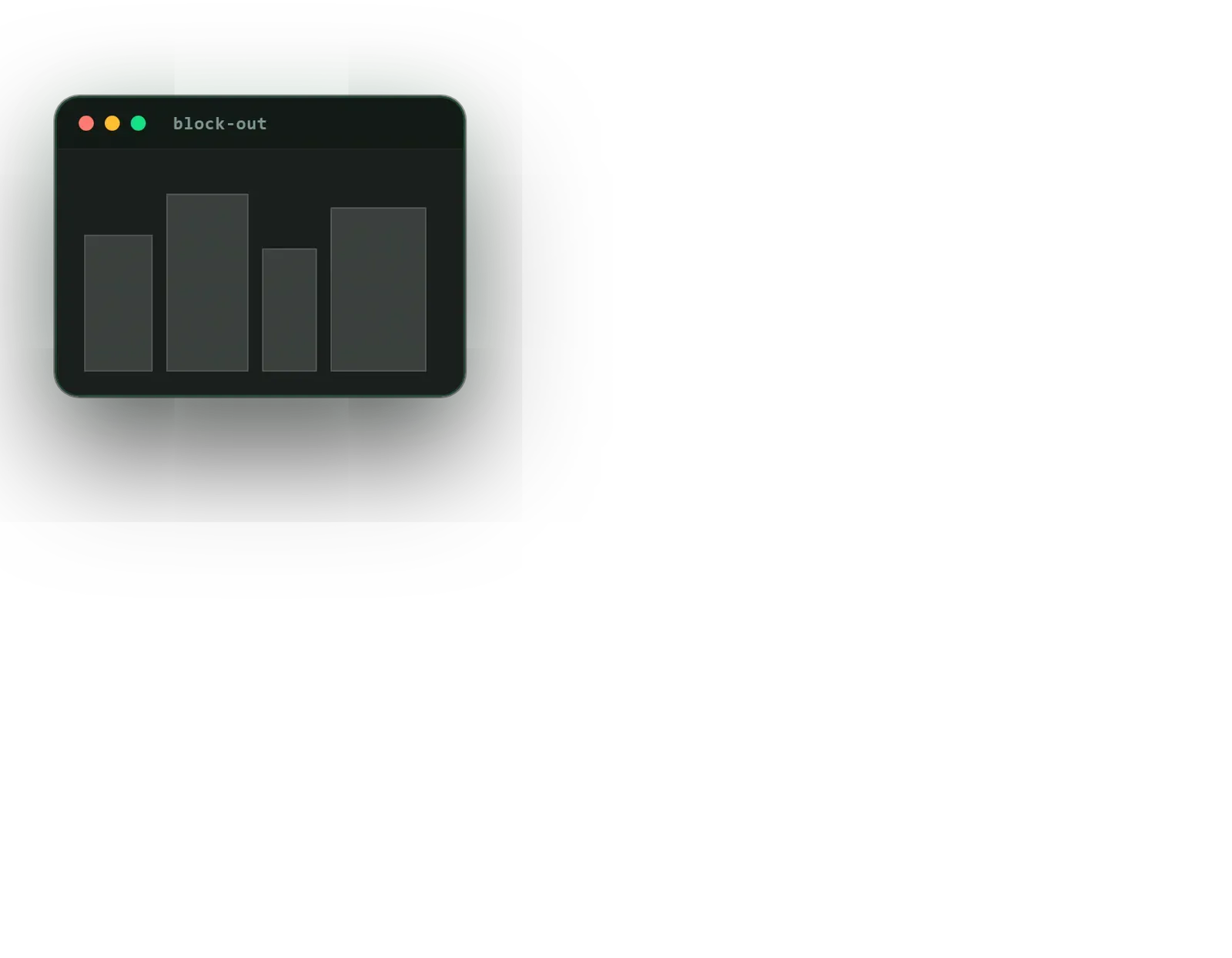
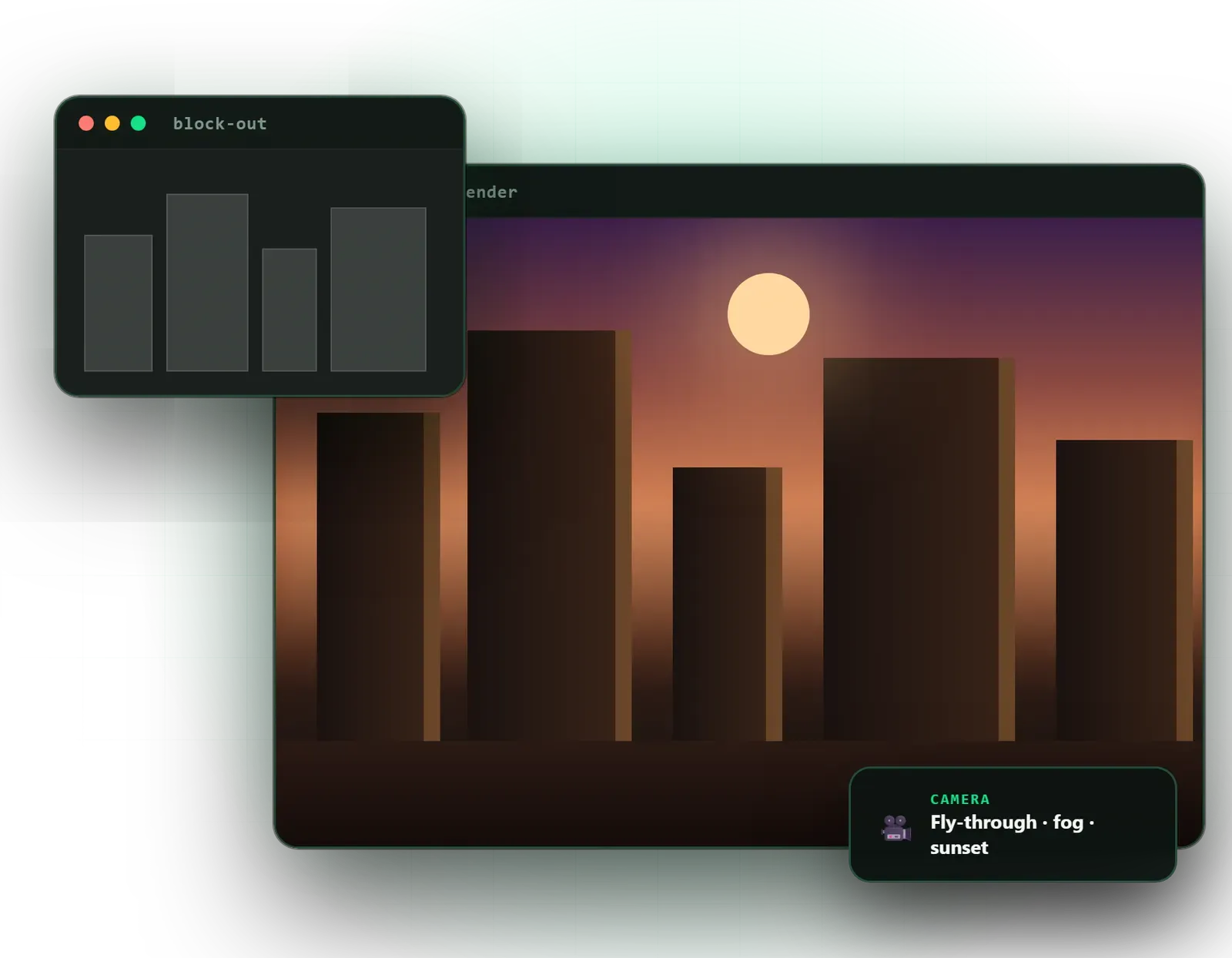
Before detailed modelling, we build a simple grey version of the scene and animate rough camera moves through it. You see shot lengths, angles and pacing early, when changes are cheap. It is the CGI equivalent of a storyboard.
We build the environment from your drawings, CAD, site photos or concept art. Then comes set dressing: furniture, plants, vehicles, signage and small props. Empty spaces look like renders; dressed spaces look like places. We use scanned asset libraries such as Quixel Megascans for natural surfaces like stone, bark and soil.
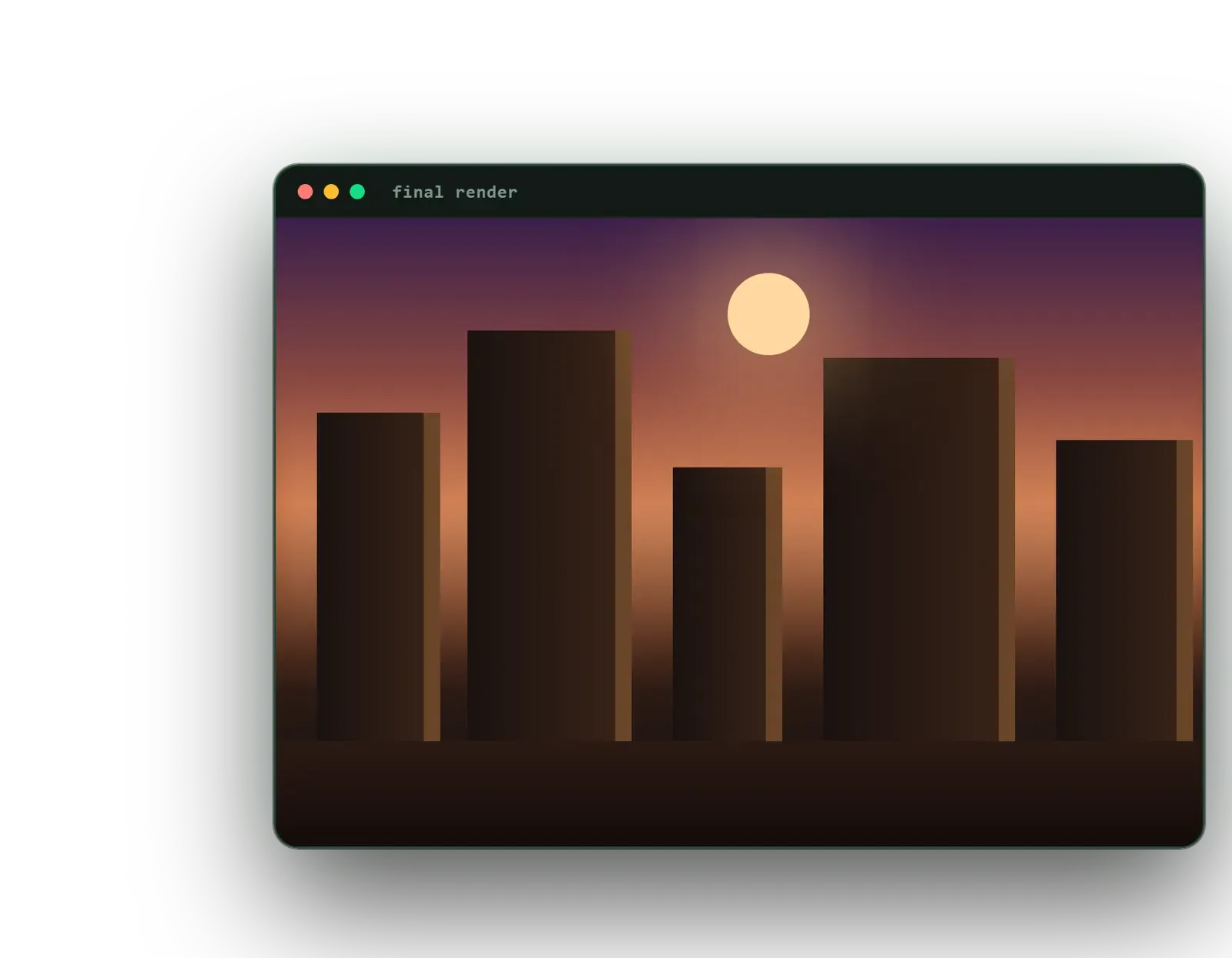
Real-time global illumination lets us test times of day quickly. Volumetric fog, light rays through windows, dust in the air and rain on glass add the cinematic atmosphere that makes viewers feel present.
The camera moves like one on a crane, drone or gimbal: smooth fly-throughs, slow reveals and walkthroughs at eye height. We add life with people walking, traffic, moving water or machinery running, depending on the scene.
The film is edited, colour graded, scored and mixed with sound design. You receive the film, high-resolution stills and cut-downs for social media.
The biggest choice is real-time or offline rendering. Unreal Engine 5 gives fast iteration, huge scenes and the option of an interactive version for sales suites and exhibitions. Offline renderers can produce very fine detail for close-up hero stills. We often combine them, building in Unreal and rendering selected shots differently where needed.
Other decisions we make together:
We do not set a standard timeline. CGI environments involve more modelling and rendering than most animation, and the effort depends on:
Changes after rendering are the most expensive kind, which is why we agree the block-out and still frames before final renders. Your fixed written quote lists the shots, length, stills, versions and revision rounds.
Every project is led personally by our founder, Nazmul Hussain, who has 10+ years of experience building websites, apps and digital products. Our team also develops Unity games, so we bring a game developer’s understanding of real-time performance and optimisation, which matters most for interactive builds.
Send your plans, CAD, concept art or references on WhatsApp at +91 70444 33991, email info@omebly.com, or use our contact page. We will send a fixed quote within 48 hours.
We collect drawings, CAD, site photos or concept art and agree the look with mood boards.
A simple grey version of the scene with rough camera moves, to agree shots and timing.
The environment built in detail, then lit and dressed, with still frames for approval.
Camera and scene animation finalised and rendered, reviewed in weekly demos.
Final edit, colour grade, music, sound design and exports for every channel.
From $900 per 30-second video. Every project gets a fixed written quote after a free consultation, with milestone payments.
From $900
Fixed quote
Fixed quote
| Omebly | A live-action shoot | |
|---|---|---|
| Needs the place to exist | No, plans, CAD or concept art are enough | Yes, plus permits and access |
| Control | Perfect light, weather and time of day on demand | Depends on weather and schedules |
| Impossible shots | Through walls, inside machines, across a city | Limited by drones, cranes and safety |
| Changes later | Re-rendered after design changes | Reshoot needed |
| Human feel | Realistic, but CGI people need care to convince | Real people and real places |
| Upfront time | Modelling and rendering take weeks | A shoot can happen in days once planned |
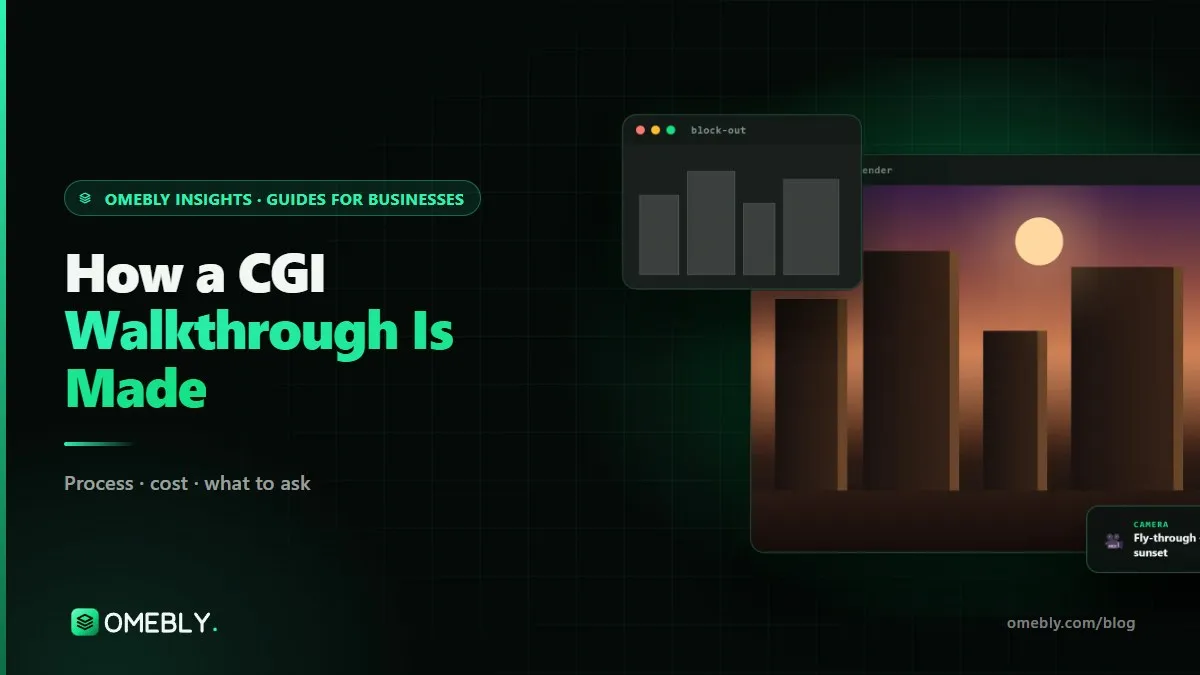
A CGI walkthrough moves through seven stages, from plans and mood boards to the final graded film. Here is what happens at each one and what the developer needs to provide.
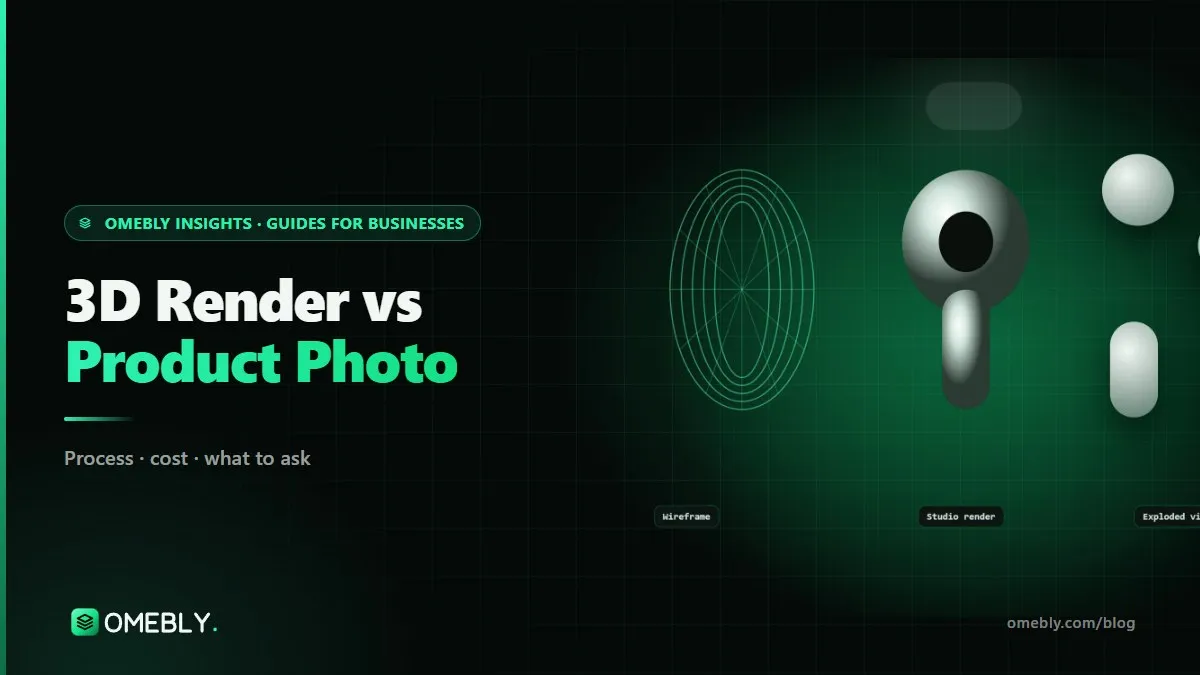
3D renders and product photos each win in different places. Here is how to decide which your store needs, product by product, and when to combine them.
Product animation focuses on one object, usually in a studio-style setting, showing its materials and features close up. CGI environment work builds whole spaces, such as buildings, interiors, landscapes or factories, with lighting, atmosphere and movement around the camera. Many projects combine both, for example a product placed inside a CGI kitchen or city scene.
Floor plans, elevations and sections, ideally as CAD or a 3D model from Revit, SketchUp, Rhino or ArchiCAD, plus material and finish schedules. Site photos and a location help us place the building in its real surroundings and set accurate sun positions. Where details are not decided yet, we agree sensible placeholders with your architect.
It renders in real time, so we can adjust lighting, cameras and materials and see the result straight away instead of waiting hours. Features like Lumen lighting and Nanite geometry handle very detailed scenes. That speed allows more iterations within the same budget. For certain close-up shots, an offline renderer may still be used.
Yes. Because the scene is built in a real-time engine, it can be packaged as an interactive build for a sales suite, trade show or meeting, where a presenter walks the space freely. Smooth interaction needs suitable hardware, usually a gaming-class PC, which we specify in advance. Web and VR versions need extra optimisation and are quoted separately.
Yes. Short CGI clips that mix real footage or real-looking places with impossible events, such as a giant product on a city building, are popular on social media. We can build these fully in CGI, or composite CGI into your own footage. They need clear disclosure in some markets if they could mislead viewers, which we will advise on.
From a normal viewing distance, very realistic. We use scanned, high-quality assets for people, cars and plants. Close-up CGI people are the hardest thing to make convincing, so we usually keep them at mid-distance, in motion or slightly out of focus, which is also how real architectural films treat them.
Tell us what you have in mind. You get a free consultation and a fixed quote within 48 hours.
Prefer email? info@omebly.com