How to Grow a Hamlet Into a Village in Dream City
The jump from Hamlet (100 people) to Village (500) is where many Dream City towns stall. Here's a step-by-step plan covering roads, zones, jobs, utilities, services and tax to get you there.
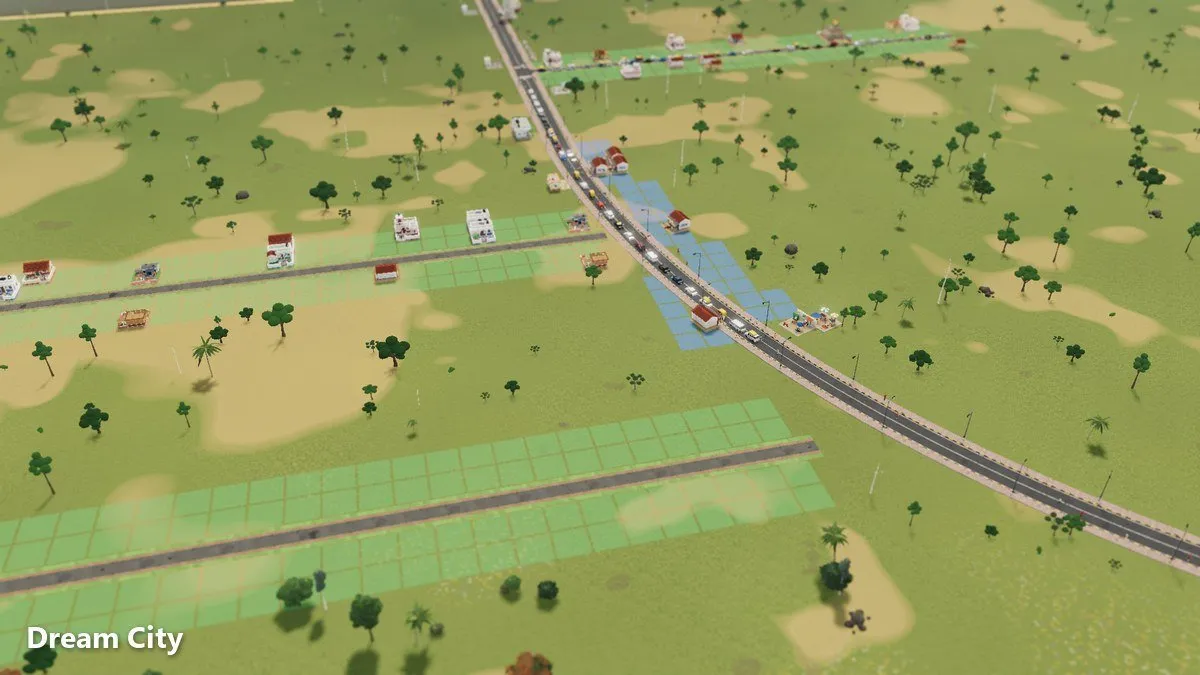
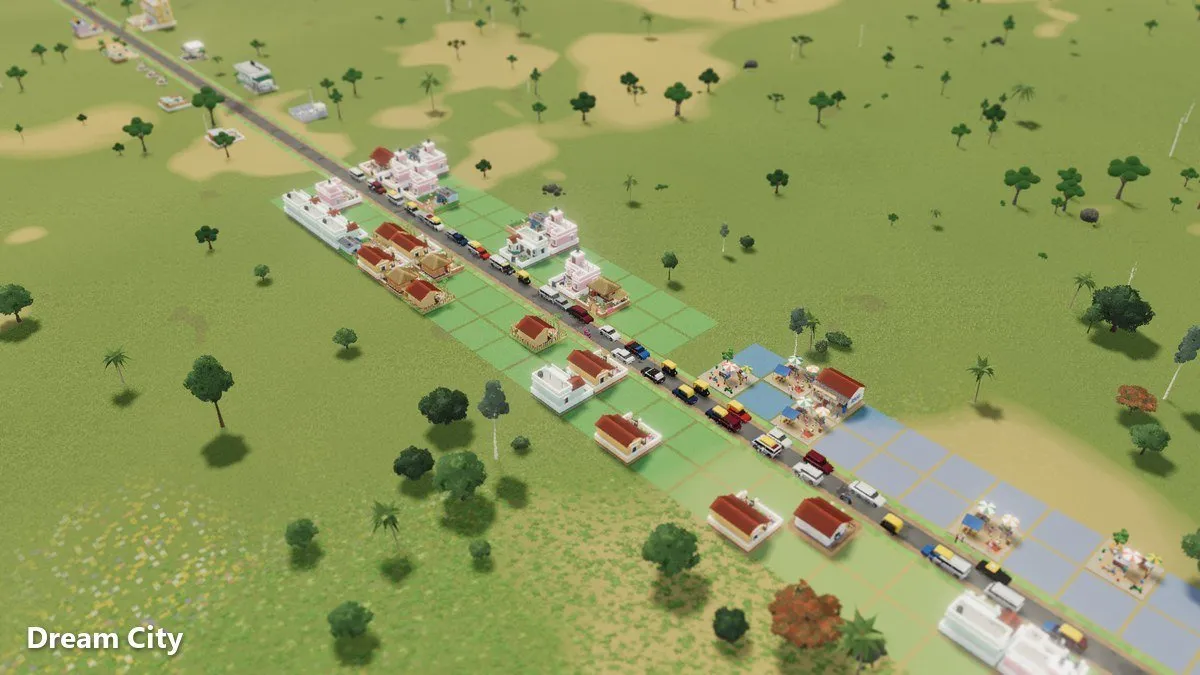
You’ve built your first roads, people have moved in, and your settlement has passed 100 residents. Congratulations: it’s now a Hamlet. The next goal is 500 people and Village status. This guide shows you how to grow a Hamlet into a Village in Dream City, step by step, without running out of money or happiness.
If you haven’t started a city yet, our beginner’s guide covers your first 30 minutes. For a full overview of the game, see the main Dream City guide.
Quick answer: To go from Hamlet (100) to Village (500), grow homes and jobs together, keeping the Jobs panel balanced. Extend power and water to every new street, keep garbage under control, and add services as they become available. Hold tax at or below 12%, check the Budget before each purchase, and listen to what residents say. Steady, balanced growth beats big spending.
Where you are: the growth stages
Dream City towns grow through Indian-style stages:
| Stage | Population |
|---|---|
| Settlement | Starting point |
| Hamlet | 100 |
| Village | 500 |
| Town | 2,500 |
| City | 10,000 |
| Metropolis | 50,000 |
Going from 100 to 500 means five times the people. That’s a big step, and it’s where your early habits start to matter. Your local government starts as a panchayat office, and it will grow into a municipal office and later a corporation HQ as the town gets bigger.
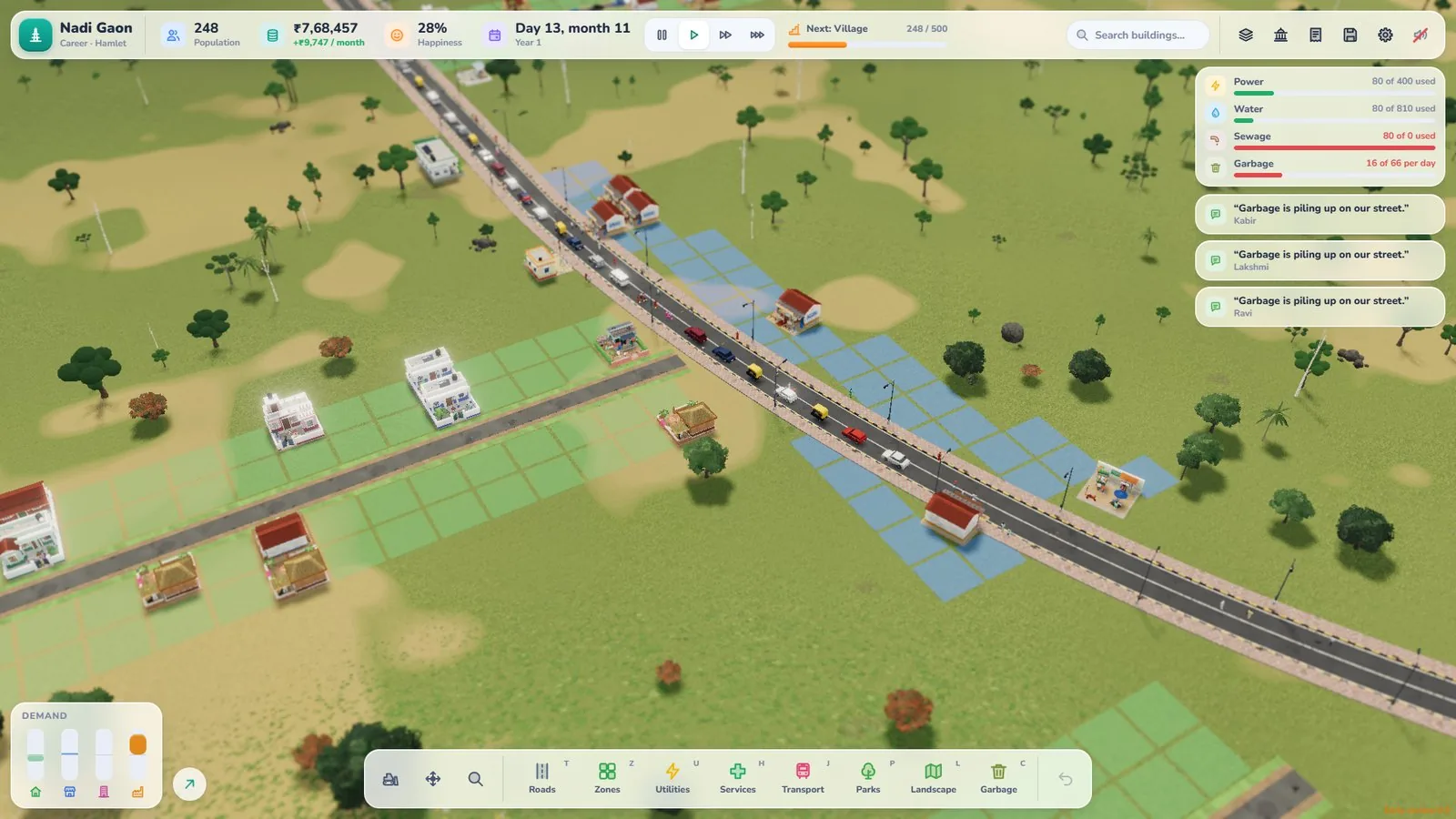
Step 1: Check the jobs balance first
Before building anything new, open the Jobs panel. It shows the balance between jobs and workers, and happiness follows that balance.
Why jobs come first
Most tax comes from people with jobs and businesses with filled jobs. A Hamlet full of homes and short of jobs earns little and gets unhappy. A Hamlet with lots of jobs but few workers has empty workplaces.
What to do
- If you have more workers than jobs, zone more work.
- If you have more jobs than workers, zone more homes.
- Grow both in small steps, checking the panel after each one.
Step 2: Expand your roads with a plan
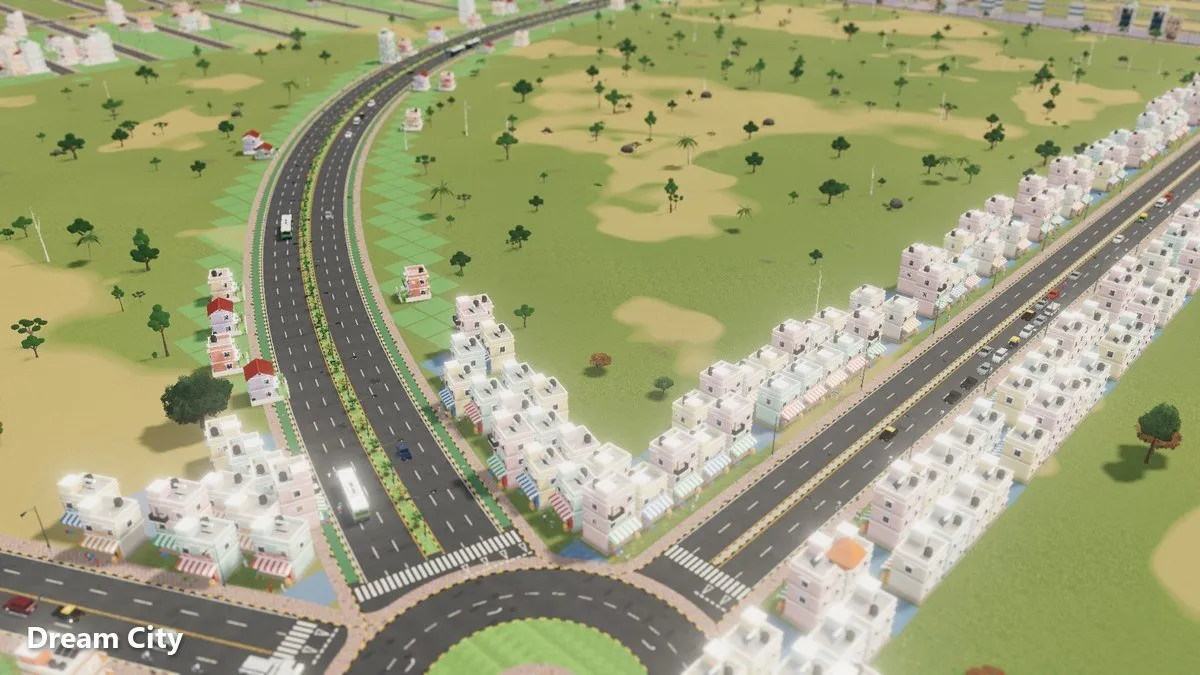
Your first spine road won’t be enough for 500 people. Extend it with side streets.
- Keep using small roads for homes. Village lanes and streets are right for this stage.
- Leave room to widen. Your main road will become busier, so avoid boxing it in.
- Use dirt paths as cheap walking shortcuts between nearby homes.
- Cross rivers cleanly. Bridges build automatically when a road crosses a river.
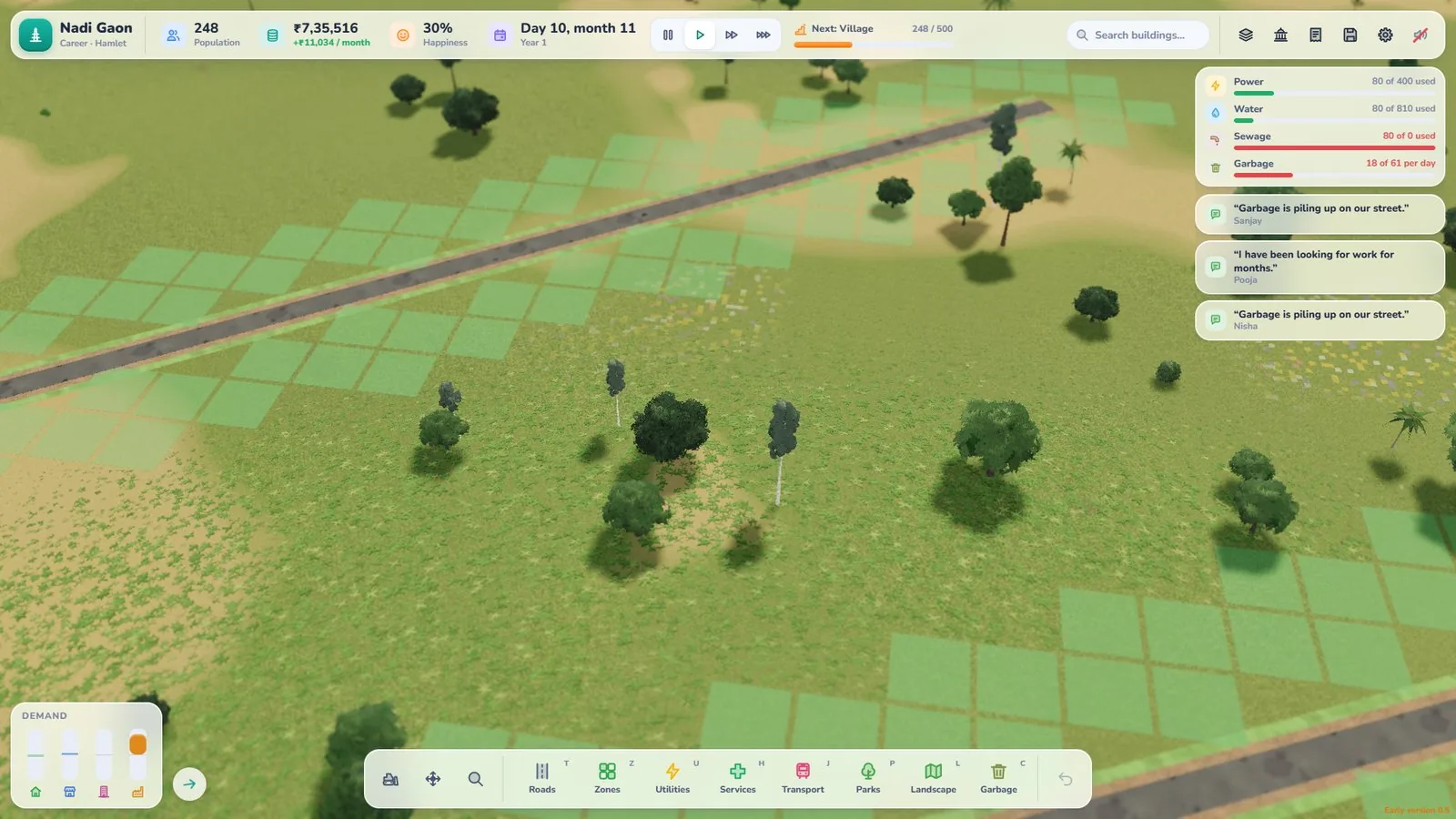
Step 3: Zone in balanced blocks
Zones grow from huts into bigger buildings as the area improves. At this stage, think in blocks:
- Zone a block of homes.
- Zone some work nearby, so commutes stay short.
- Connect them with a road and make sure utilities reach them.
- Wait for people to move in, then check the Jobs panel.
- Repeat.
Small, balanced blocks grow faster and more reliably than one huge zone.
Step 4: Keep up with utilities
More people means more demand for power, water and waste.
Power
You started with a diesel generator or a solar mini-grid. Diesel is cheap to build but pollutes and costs more to run. Solar costs more to build, has very low upkeep and makes no pollution. As your Hamlet starts earning, solar is often the better long-term choice. Pollution drifts with the wind, so keep any diesel away from homes.
Water
Every new street needs water. Dream City has wells, pumps and water towers, plus sewage. Plan water as you plan roads, not after. The utilities section of our main Dream City guide covers the options.
Waste
Your village garbage point handles the early days. As the population grows, keep an eye on garbage and expand collection when it’s needed.
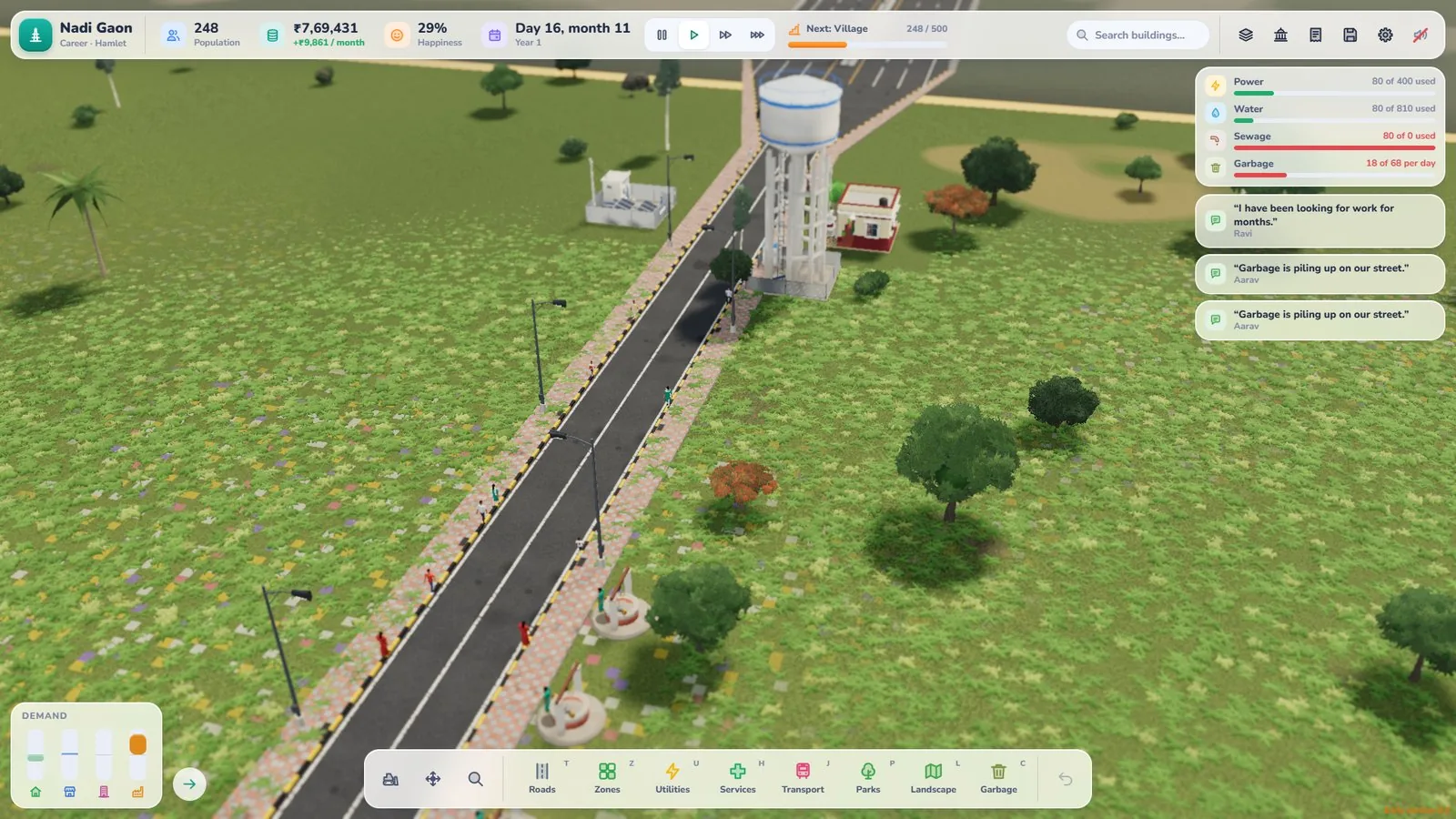
Step 5: Add services as they arrive
Each stage unlocks new buildings and services. Dream City’s services feel familiar: an Anganwadi, a PHC, schools, police, fire, places of worship, parks, a ration shop, an ATM and a mandi, with bigger services such as hospitals and colleges later.
How to place services well
- Put them near homes, so people don’t travel far.
- Spread them out rather than stacking them all in one corner.
- Remember the cost. Services cost more as they get busier, so add them when they’re needed.
Step 6: Keep tax fair
It’s tempting to raise tax when money is tight. Don’t.
- Up to 12% feels fair.
- Above 12% happiness drops.
- Above 22% people leave.
A Hamlet that’s losing people will never reach Village. Fix money problems by balancing jobs and cutting waste, not by squeezing residents.
Step 7: Read the Budget and listen to people
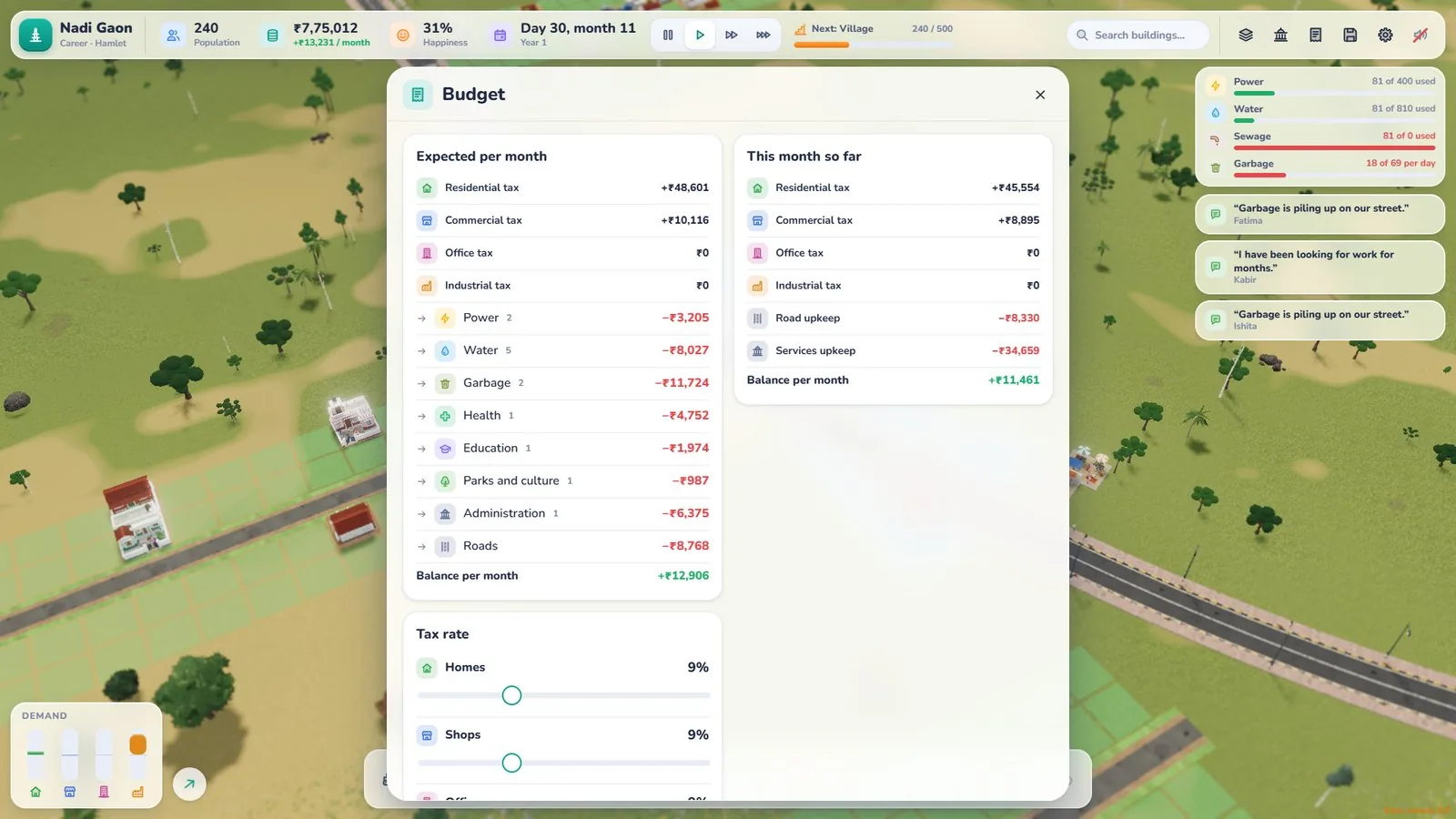
The Budget groups your monthly costs by department, and each group shows every kind of building, how many you have and what they cost. Wages rise as the town grows, so costs creep up. Check the Budget before every purchase.
Then listen. You can follow a resident’s day, and residents speak their mind. If several people mention the same problem, that’s your next job.
Step 8 (Career only): Plan your next plot
In Career mode you can buy more land as you earn, up to a 5×5 map. Don’t buy land just because you can. Buy it when your current plot is filling up, and know what the new land is for: more homes, a work district, or space for utilities away from houses.
Step 9: Think about getting around
As the Hamlet spreads out, walks get longer. Keep homes and work close together, and add dirt paths as walking shortcuts where roads take the long way round. When transport buildings become available to you, bus stops, bus stands and bus lines help people reach jobs and services without long commutes. Place stops where people can reach them on foot, and add zebra crossings where they need to cross a busy road. Good transport now makes the later jump to Town much easier.
Why Hamlets stall
- Homes with no jobs. No work means little tax and no happiness.
- Streets with no water or power. New homes need the basics.
- Tax above 12%. Happiness drops.
- Overbuilding. Big roads and too many services drain the Budget.
- Diesel beside homes. Pollution drifts with the wind.
Your Hamlet-to-Village checklist
- Jobs panel roughly balanced
- Side streets planned off the main road
- Power and water on every street
- Garbage handled
- Services added near homes as they unlock
- Tax at or below 12%
- Budget checked before each purchase
Hit 500 and your Hamlet becomes a Village. The same habits will carry you to Town at 2,500.
Open your Hamlet in Dream City and start growing it into a Village.
Frequently asked questions
How many people do I need for a Village in Dream City?
A Hamlet starts at 100 people. Your town becomes a Village at 500.
Why has my Hamlet stopped growing?
Check the Jobs panel first. Happiness follows the balance between jobs and workers. Also check that new homes have power and water, and that tax is not above 12%.
What tax rate helps growth?
Up to 12% feels fair to residents. Above 12% happiness drops, and above 22% people leave.
What comes after Village?
Town at 2,500 people, then City at 10,000 and Metropolis at 50,000.
Should I switch from diesel to solar?
Diesel is cheap to build but pollutes and costs more to run. Solar costs more to build but has very low upkeep and no pollution. As your Hamlet earns, solar often makes sense for the long run.

Written by
Nazmul Hussain, Managing Director & Technical Head, Omebly. 10+ years building websites and apps for clients in India, the Gulf, the UK and the US, and mentoring at Omebly Academy. LinkedIn · GitHub
Follow Omebly
New guides, work and launches on every channel.