










Founders who struggle to explain the business
A short, tested way to say what you do and why it matters, in one sentence and in thirty seconds.
Omebly PDF Tools
Edit PDFRotate PDFHeader and footerBates numberingResize PDFEdit metadataPDF bookmarksAdd page numbersAdd watermarkCrop PDFCreate PDF formFill PDF formsMerge PDFSplit PDFRemove pagesExtract pagesOrganise PDFPages per sheetScan to PDFBatch PDFCompress PDFGrayscale PDFOptimise for webRemove commentsRepair PDFOCR PDFJPG to PDFPNG to PDFText to PDFMarkdown to PDFEPUB to PDFWord to PDFPowerPoint to PDFExcel to PDFHTML to PDFPDF to JPGPDF to PNGPDF to TextExtract imagesPDF to EPUBPDF to WordPDF to PowerPointPDF to ExcelPDF to PDF/AUnlock PDFProtect PDFSign PDFFlatten PDFRedact PDFCompare PDFAI SummarizerTranslate PDFChat with PDFPDF to MarkdownOne clear way of describing your business, and a voice your team can write in, from the website to WhatsApp replies.
From $2,000 one-time
A short, tested way to say what you do and why it matters, in one sentence and in thirty seconds.
A shared voice and copy rules so the website, sales emails and social posts sound like one company.
Taglines, key messages and a voice ready before the website and campaigns are written.
Your core message, supporting messages and proof points, arranged from most to least important.
Three or four principles that describe how the brand sounds, with examples.
Where you sit between pairs such as bold or authoritative, formal or casual, and how it flexes by channel.
One-line, short and thirty-second versions for introductions, bios and calls.
A shortlist of tagline routes, with the thinking behind each.
Key messages adjusted for each main customer type.
Do's and don'ts, word lists, grammar choices and before-and-after rewrites.
A homepage hero, an about paragraph and a social post written in the new voice.
Many good businesses lose customers at the first sentence. The website says one thing, the sales deck says another, and the founder explains it differently every time. Omebly’s brand messaging services fix that: we agree what you say, in what order, and in what voice, then write it down in a framework and guidebook your whole team can follow.
This is the verbal side of your brand: elevator pitches, taglines, key messages and the copywriting rules that make your website, emails, ads and even WhatsApp replies sound like one company. It suits founders who struggle to explain the business, teams where everyone writes differently, and brands preparing a launch or rebrand. Tone of voice and messaging is part of Omebly’s brand building service.
Signs your messaging needs work:
A language audit. We read your website, brochures, proposals, social posts and emails, and compare them with your competitors’ wording. We also gather your customers’ own language from reviews, enquiries and interviews. The gap between how customers describe a problem and how a business describes its service is often where messaging goes wrong.
One core message at the top, three or four supporting messages beneath it, and proof points for each, such as facts, features or process details you can show. The framework also lists what not to lead with. It becomes the reference for every page, pitch and campaign.
Three or four principles that describe how you sound, each with a short explanation and examples. The tone spectrum places you between pairs such as bold or authoritative, formal or casual, playful or serious, and shows how far each channel can move.
One-line, short and thirty-second versions of what you do, for bios, introductions, events and sales calls. Tagline options come as a shortlist of routes, each tied to the messaging.
If you sell to more than one type of customer, such as owners and managers, or buyers in the UAE and in India, we adjust the emphasis for each, while keeping the core message the same.
Practical do’s and don’ts, words to use and avoid, spelling and grammar choices such as British or American English, how to write headlines and buttons, and before-and-after rewrites of your real copy.
Start from the strategy. Messaging is strongest when it sits on a clear position. If yours is not settled, we start with a short positioning exercise or recommend our brand strategy service first.
Businesses often describe themselves in terms their customers never use. We build messages from the language customers actually use, so your website matches what they search for and say.
Every supporting message needs proof. We avoid empty superlatives and help you find specific, checkable details, such as how your process works, what is included or how quickly you reply, that make the claims believable.
Principles on their own are abstract. We rewrite real pieces of your copy, such as a homepage hero, an about paragraph and a social post, so you can hear the voice before you approve it. Reading copy aloud is part of every review.
A brand should sound like itself everywhere, but not identical everywhere. Support replies need calm and clarity; a launch post can be bolder. The tone spectrum makes those shifts deliberate.
We keep the guidebook short, lead with the most-used pages and include quick checklists writers can run through before publishing. It can sit inside your visual brand guidelines as one complete brand book.
Your fixed written quote sets the timeline after the free consultation. The main factors are:
If you are planning a new website or campaign, it is usually quicker to settle the messaging first, so copy is written once rather than rewritten.
Starting prices for brand projects are shown on the parent service page.
Every project is led by our founder, Nazmul Hussain, who has 10+ years building websites, apps and digital products, so the messaging is written knowing it must work in website headers, app screens and ad copy, not just in a document. You get a fixed written quote within 48 hours, weekly reviews of the drafts and milestone payments released only after you review each stage. Once fully paid, the framework, guidebook and copy we create are yours, and an NDA is available on request.
Want a clearer way to explain your business? Message us on WhatsApp at +91 70444 33991 or book a free consultation.
Your business, audiences and current materials discussed, then a fixed written quote.
Your website, sales materials, social posts and competitors' wording reviewed, plus customers' own words.
A session to agree priorities, personality and the claims you can prove.
Framework, voice principles, pitches and taglines drafted and refined each week.
Final copywriting guide, sample copy and a walkthrough for your team.
From $2,000 one-time. Every project gets a fixed written quote after a free consultation, with milestone payments.
From $2,000
Fixed quote
| Omebly | Leaving it to whoever writes the copy | |
|---|---|---|
| What you say first | Agreed core message and priorities | Different on every page and post |
| How you sound | Defined voice with examples | Depends on who is writing that day |
| Claims | Only claims you can back up | Generic superlatives |
| New writers and agencies | Briefed in minutes with the guidebook | Learn by trial and error |
| Customer language | Built from the words customers use | Built from internal jargon |
The same message can sound warm, expert or playful. Here are tone of voice examples for real business moments, and a simple method to define a voice your whole team can write in.

What a startup actually needs from brand identity design: logo system, colours, typography, tone of voice and guidelines, plus the process, costs and common mistakes.
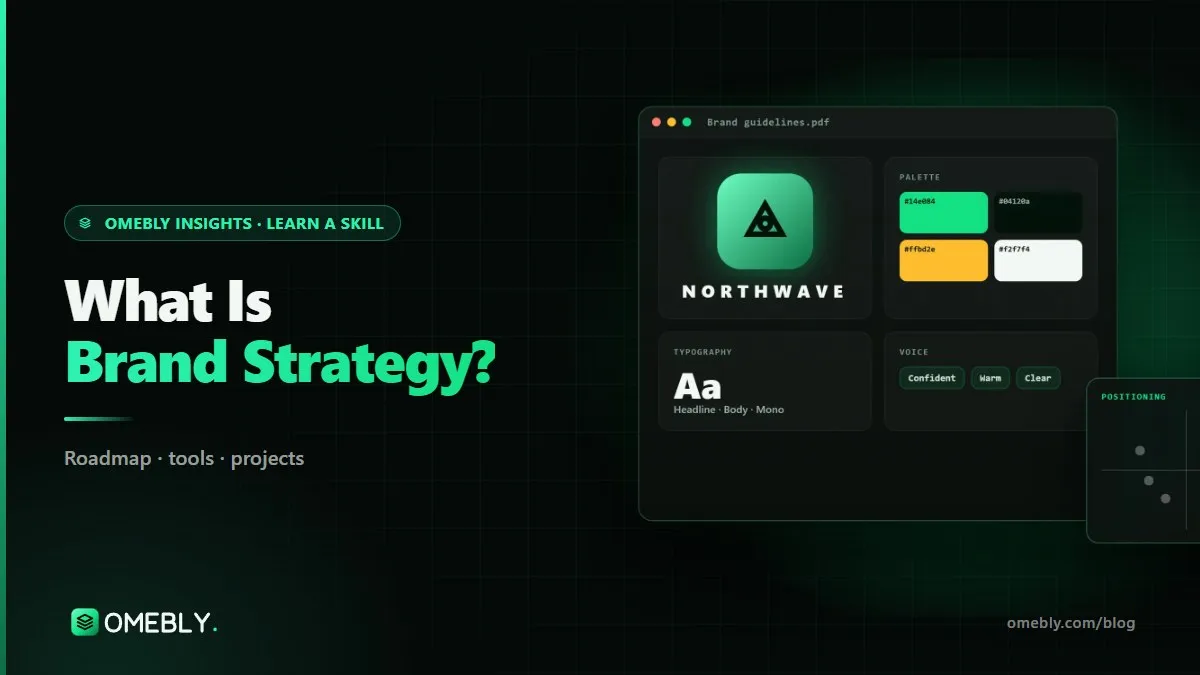
A beginner's guide to brand strategy: what it is, how positioning, identity and voice fit together, and a practical plan to learn it with real projects.
Messaging is what you say: the core idea, supporting points and proof that explain why someone should choose you. Tone of voice is how you say it: the personality, word choices and rhythm. Both are needed. Clear messages in an inconsistent voice feel disjointed, and a strong voice with no clear message sounds pleasant but says little.
This service creates the foundations: the framework, voice and guidebook, plus sample copy to show the voice in use. Full website copy is a separate piece of work that we can quote alongside it, often with our web team. Many clients find their own team or copywriter can write much faster once the messaging is agreed.
Yes, and it should a little. Your personality stays the same, but the tone flexes with the situation, just as a person speaks differently in a meeting and over coffee. The tone spectrum shows how far each channel can move, for example more relaxed on Instagram and calmer and clearer in support replies.
We start from the messaging framework, so each tagline expresses something true about your business. We write many lines, then present a shortlist grouped by route, such as promise-led or personality-led, with reasons. We check that each is easy to say and not obviously used by a competitor. Trademark checks stay with your legal adviser.
We create the core messaging and voice in English. For Arabic, Hindi or Bengali versions, we work with a native-speaking writer you choose or one we recommend, and we include guidance on what should be adapted rather than translated word for word, because humour, formality and idioms rarely carry across languages directly.
Keep it short and practical, then show people how to use it. The guidebook leads with the most useful pages: the elevator pitch, the voice principles and a list of words to use and avoid. We run a short walkthrough at hand-over, and the before-and-after rewrites make the change concrete for writers.
Tell us what you have in mind. You get a free consultation and a fixed quote within 48 hours.
Prefer email? info@omebly.com