

First-time founders
Turn an idea into a working app you can show to users and investors, without building features nobody has asked for.
Omebly PDF Tools
Edit PDFRotate PDFHeader and footerBates numberingResize PDFEdit metadataPDF bookmarksAdd page numbersAdd watermarkCrop PDFCreate PDF formFill PDF formsMerge PDFSplit PDFRemove pagesExtract pagesOrganise PDFPages per sheetScan to PDFBatch PDFCompress PDFGrayscale PDFOptimise for webRemove commentsRepair PDFOCR PDFJPG to PDFPNG to PDFText to PDFMarkdown to PDFEPUB to PDFWord to PDFPowerPoint to PDFExcel to PDFHTML to PDFPDF to JPGPDF to PNGPDF to TextExtract imagesPDF to EPUBPDF to WordPDF to PowerPointPDF to ExcelPDF to PDF/AUnlock PDFProtect PDFSign PDFFlatten PDFRedact PDFCompare PDFAI SummarizerTranslate PDFChat with PDFPDF to MarkdownA focused first version of your app in real users' hands, with the data to decide what to build next.
From $8,000 one-time
Turn an idea into a working app you can show to users and investors, without building features nobody has asked for.
Check whether customers will use a new app before committing to a full product budget.
Move a prototype that is hitting its limits onto real code you own and can grow.
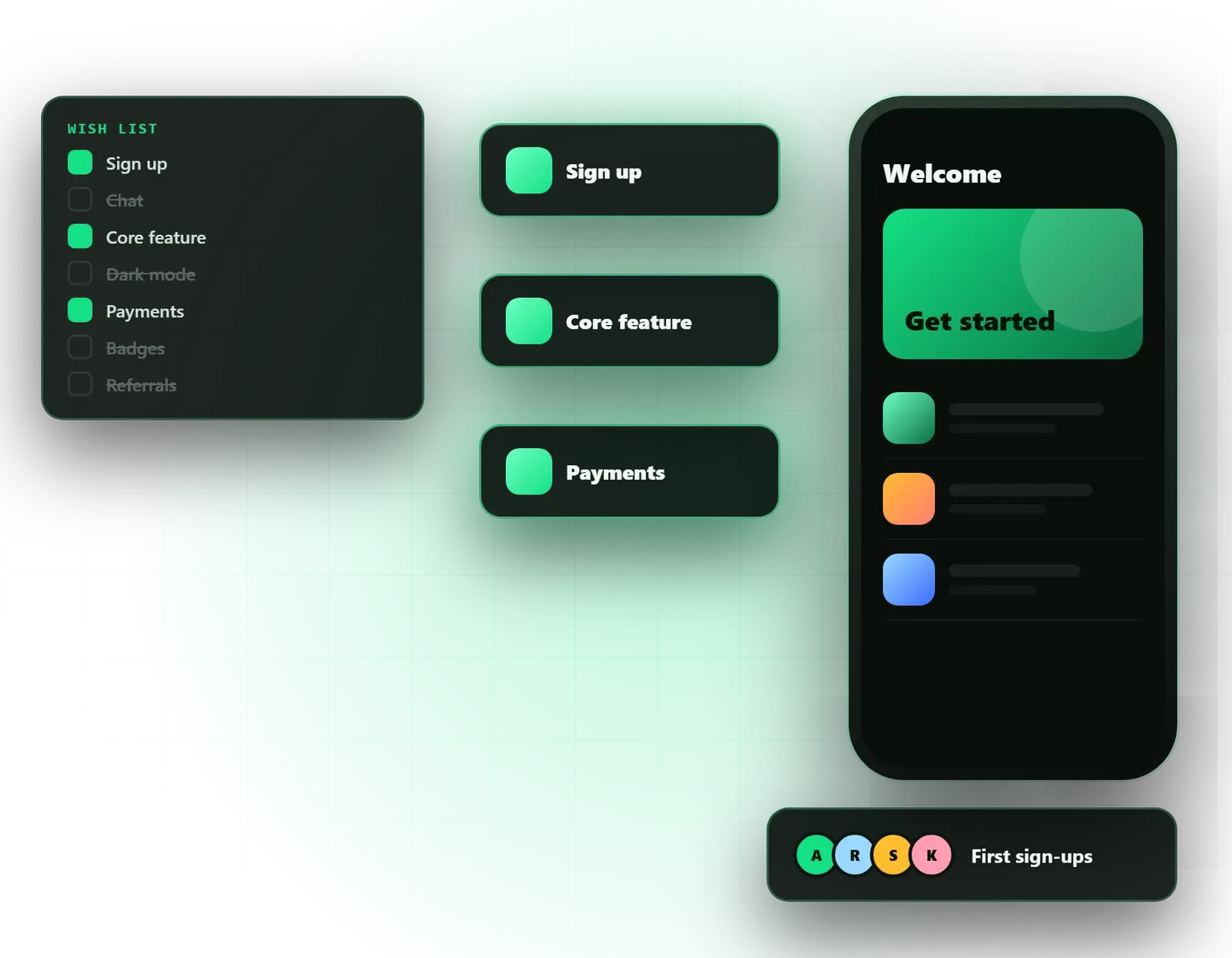
A working session that splits your idea into must-have, later and maybe, and agrees the one job version one must do well.
The core flow designed in Figma and tested with a handful of target users before development starts.
A Flutter app for Android and iOS, so you learn from both audiences without paying for two builds.
Firebase or Supabase for accounts, data and notifications, so budget goes on your core feature rather than plumbing.
Events for sign-up, activation and the core action, so you can see where users drop off from day one.
TestFlight and Google Play internal testing builds, so early users try the app before public launch.
A basic panel to manage users and content without asking a developer.
Store release, then a review of the first usage data to plan version two.
Bugs in code Omebly wrote are fixed free, as set out in our support policy.
Most first apps fail for a simple reason: they try to do too much before anyone has used them. Months go into features, settings and edge cases, and the launch reveals that users only cared about one thing. As an MVP app development company, Omebly helps founders build the smallest version of the app that real people can use, then learn from them before spending more.
That means our first job is not code. It is helping you decide what not to build yet. The result is a working app for Android and iOS, with sign-in, a real backend and your core feature, released to real users with analytics in place so you can see what they actually do.
This service suits first-time founders, businesses testing a new product idea alongside their main work, and founders whose no-code prototype has proved there is interest but is now holding them back.
A scoping workshop. We list every feature you have in mind and sort each one into must-have, later or maybe. We agree the one job version one must do well, and we look for features a manual process can replace for now, such as approving accounts by hand instead of building an approval system.
The core flow is designed in Figma and linked into a clickable prototype. We encourage you to put it in front of a few target users. If they get stuck, the fix costs an hour of design, not a week of development.
MVPs are built in Flutter, so one codebase reaches both Android and iPhone users. You learn from both audiences without paying for two apps.
For most MVPs, Firebase or Supabase handles accounts, data, file storage and notifications. That keeps budget on the feature that makes your product different. If your idea needs custom logic from day one, our mobile app backend development work covers that.
We set up analytics events for sign-up, activation and the core action, plus a simple admin panel so you can manage users and content.
Early users test through TestFlight and Google Play internal testing before the public release. We work the same way on our own app, Omebly App (in testing on Android): testers receive new builds as they are ready and their feedback shapes what we fix and build next, so we know how much a structured beta teaches you before a wider release.
Speed over polish, but not over quality. An MVP can have fewer screens and simpler visuals. It should not crash, lose data or leak private information. We cut scope, not corners.
The code uses the same clean Flutter structure we use for larger apps, so version two builds on version one rather than replacing it. We note in writing which parts are deliberately simple and how they would grow.
Payouts, approvals, reports and matching can often run by hand for the first users. Automating them later, once you know they matter, is cheaper than guessing now.
Before launch we agree two or three signals with you, such as completing the core action and returning the next week. That turns launch from a hopeful moment into a test with a readable result. A few weeks after release, we review the numbers with you and turn them into a short, prioritised plan for version two.
The free consultation leads to a fixed written quote within 48 hours, after the must-have list is agreed. MVPs are planned in the 30 to 60-day build sprints described on our app development page, and the workshop is where we keep scope inside that window.
The main factors are:
If a feature would push the MVP past its window, we suggest a simpler version for launch and put the full version on the plan for later.
Every MVP is led by founder Nazmul Hussain, who brings 10+ years of his own experience building websites, apps and digital products, and who will push back when a feature can wait. You get a fixed written quote, milestone payments released only after you have seen the work, and a working demo every week on your own phone.
Once the project is fully paid, you own the source code, designs and accounts we set up, so a future in-house team or another developer can carry on. An NDA is available on request, which matters when your idea is still private. After launch, bugs in code Omebly wrote are fixed free under our support policy; new features for version two are quoted separately. When you are ready to release, our app store launch and support service covers the listing and review side.
Share your idea on WhatsApp or through the contact page, and we will help you find the smallest version worth building.
A WhatsApp or video call about the problem you solve, who has it and what you need to prove first.
We agree the must-have feature list together, then send a written quote with timeline, milestones and price within 48 hours.
A clickable Figma prototype tested with a few target users, with changes made before any code.
A test build every week on your phone, with each milestone paid only after you have seen it.
Beta testing, store release and a review of the first real usage data to plan the next version.
From $8,000 one-time. Every project gets a fixed written quote after a free consultation, with milestone payments.
From $8,000
Fixed quote
Fixed quote
| Omebly | In-house hire | |
|---|---|---|
| Time to start | Design can start once the quote is agreed | Weeks or months to recruit the right developer |
| Skills covered | Design, Flutter, backend and store release in one team | One hire rarely covers design, mobile and backend |
| Cost certainty | Fixed written quote with milestones | Salary and overheads whether or not the MVP works |
| Scope discipline | Must-have list agreed in writing before the build | Easy to keep adding features with no deadline |
| After the MVP | Clean, documented code a future in-house team can take over | Knowledge can leave with the one person who built it |
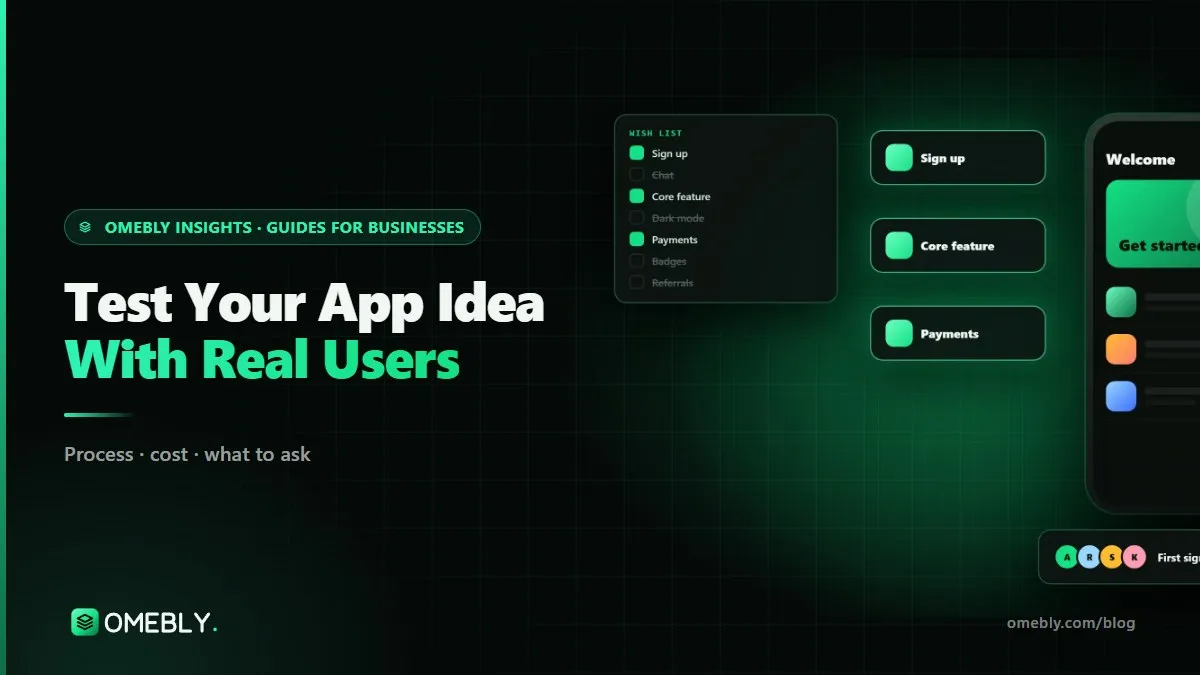
Before you pay for an app, find out whether people want it. Here is a step-by-step way to test an idea with real users in a few weeks.
An MVP is the smallest app that proves your idea with real users. Here is how to scope it, what it costs and how long a first version should take.
Most Indian users are on Android, but that doesn't settle it. Here is how to decide whether to launch on Android, iOS or both, based on your users and budget.
An MVP, or minimum viable product, is the smallest version of your app that real users can use to solve one real problem. It is not a demo or a cut-down mock-up; it is a working app with sign-in, data and a core feature. Its job is to prove whether people want the product before you spend on everything else.
In the scoping workshop we write down every feature you have in mind, then ask of each one: does a user need this to get the core result? Must-haves go in version one. The rest goes on a dated list for later. We also look for features a simpler manual process can replace for the first few hundred users.
It should not be. We build MVPs on the same Flutter structure and clean architecture we use for larger apps, so later features are added to the code rather than starting again. What does change as you grow is usually the backend, for example moving from Firebase to a custom server, and we plan for that path.
Yes. A no-code prototype is useful evidence. We review what users already do in it, keep the flows that work, and rebuild them in Flutter with a backend you own. Moving data from the no-code tool is quoted as part of the scope, and we plan a switch-over date so existing users are not left stranded.
Focus on a few numbers: how many people sign up, how many complete the core action at least once, and how many come back the following week. We set these events up in analytics before launch. Downloads alone say little; repeat use of the core feature tells you whether the MVP has found a real need.
Yes, and a working app with real users usually says more than slides. We can prepare a stable demo build, a short screen recording of the core flow and a summary of the analytics events we track. We do not write investor claims or projections for you, but we make sure the product side is ready to show.
Tell us what you have in mind. You get a free consultation and a fixed quote within 48 hours.
Prefer email? info@omebly.com