

Event organisers and conferences
Turn every stage and session into recap reels, full keynotes and clips for next year's promotion.
Omebly PDF Tools
Edit PDFRotate PDFHeader and footerBates numberingResize PDFEdit metadataPDF bookmarksAdd page numbersAdd watermarkCrop PDFCreate PDF formFill PDF formsMerge PDFSplit PDFRemove pagesExtract pagesOrganise PDFPages per sheetScan to PDFBatch PDFCompress PDFGrayscale PDFOptimise for webRemove commentsRepair PDFOCR PDFJPG to PDFPNG to PDFText to PDFMarkdown to PDFEPUB to PDFWord to PDFPowerPoint to PDFExcel to PDFHTML to PDFPDF to JPGPDF to PNGPDF to TextExtract imagesPDF to EPUBPDF to WordPDF to PowerPointPDF to ExcelPDF to PDF/AUnlock PDFProtect PDFSign PDFFlatten PDFRedact PDFCompare PDFAI SummarizerTranslate PDFChat with PDFPDF to MarkdownHours of event or interview footage shaped into films people actually want to watch.
From $150 per video
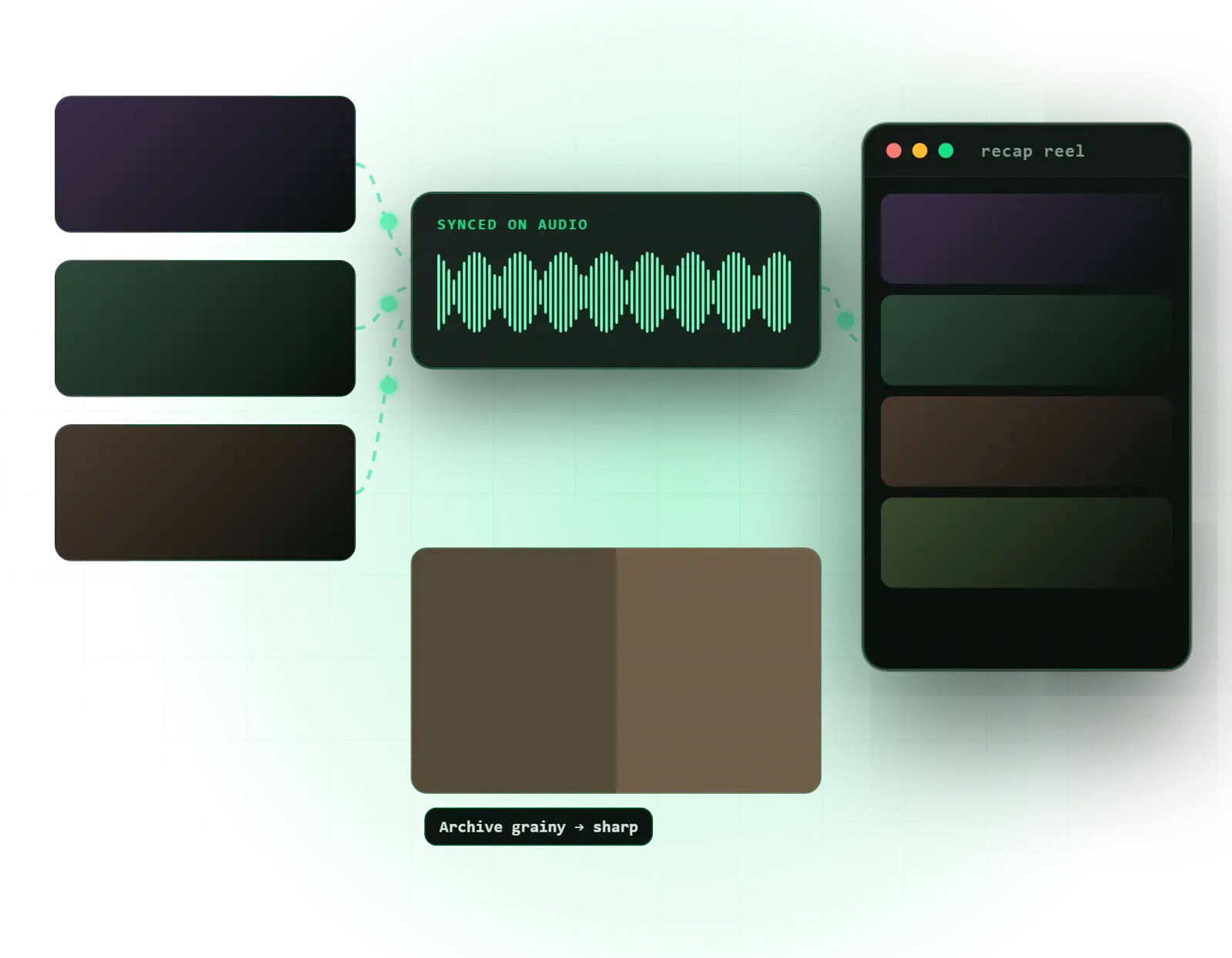
Turn every stage and session into recap reels, full keynotes and clips for next year's promotion.
Tell the story of a project, a founder or a community through an honest, interview-led documentary.
Restore and edit old footage into a film that can be shared and kept.
A short, energetic film that captures the atmosphere, speakers and moments of the day.
Multi-camera talks synced and cut between angles, with slides inserted cleanly where they matter.
Vertical and square clips of quotes and highlights for promoting the event afterwards.
Interviews, observational footage and archive shaped into a clear story with a beginning, middle and end.
Interviews transcribed so the story can be planned on paper before the timeline.
Old footage cleaned of noise and damage, stabilised and upscaled to sit alongside modern shots.
Speaker names, locations and subtitle files so films are clear and accessible.
Colour matched across cameras and dialogue cleaned and mixed, so the film feels finished.
Events and documentaries share the same challenge: far more footage than anyone will watch, recorded on several cameras in conditions nobody fully controls. Our event video editing and documentary service turns those hours into films with a clear story, whether that is a two-minute conference recap, a full keynote with slides, or a long-form documentary built from interviews and archive.
We work with event organisers and conferences who need recaps and session videos, companies and NGOs telling the story of a project or a community, and families or institutions with archive footage worth preserving. It is part of our wider video editing service, for projects where structure and storytelling matter more than speed of posting.
For events, the core deliverable is a recap film: the energy of the room, the key speakers and the moments people will remember, cut to music in a few minutes. Alongside it we edit full keynotes and sessions, cutting between camera angles and inserting slides cleanly so remote viewers can follow, and add speaker lower thirds and your event branding. Short vertical and square clips of quotes and highlights help with promotion afterwards and for next year.
For documentaries, the edit starts with transcripts. We transcribe interviews, build a paper edit, then assemble interviews, observational footage and archive into a story with a real arc. Titles, maps or lower thirds add context where needed.
Archival footage gets its own treatment. Older clips can be cleaned of noise and flicker, stabilised and upscaled so they sit comfortably next to modern camera footage. Every film is finished with a colour grade that matches the cameras and a sound mix that makes speech clear, plus subtitle files where you need them.
The most important decisions happen before fine cutting. For an event, we ask who the film is for: attendees who want to relive the day, sponsors who want to see their presence, or future buyers deciding whether to come. Each audience needs a different recap. For a documentary, we ask what the film should leave people believing or feeling, and choose interviews to serve that, not to include everyone.
Multi-camera work is synced by timecode where possible and by audio waveform where not, so phones, drones and professional cameras can all be used. Venue audio is often the weak point, so we use the sound desk feed when it exists and clean room recordings in iZotope RX when it doesn’t.
Longer projects run on weekly review cuts. The rough cut is about structure, and we ask you to ignore polish at that stage; the fine cut refines pacing and detail; picture lock fixes the edit before grading and mixing begin. This keeps changes cheap, because the expensive finishing work happens only once.
A single recap film moves much faster than a documentary, which may run over several weeks of review. The main factors are the hours of footage, the number of cameras and sessions, whether interviews need transcribing, the amount of archive to restore, the number of versions and languages, and how much colour and sound finishing is required.
If timing matters, for example for a sponsor report or a post-event email, tell us and we will prioritise the recap and social clips and deliver full sessions after. You receive a fixed written quote within 48 hours of a free consultation, with milestones tied to the rough cut, fine cut and final delivery.
If we are involved before the event, the edit improves noticeably. We can suggest a simple shot list: a wide of the venue filling up, close-ups of branding and sponsors, audience reactions, speaker close-ups and short interviews with attendees. For keynotes, keep the presenters’ slide files so we can insert them cleanly rather than filming a projector screen, and ask for a clean feed from the sound desk, which is the single biggest improvement for speeches.
For documentaries, recording interviews with two angles and a separate microphone gives far more freedom in the edit, and noting who said what saves hours of searching later. If you film across several days or cities, share a simple log of what was shot where. None of this is required, but each step means more of the budget goes into storytelling.
Projects are led by founder Nazmul Hussain, who brings 10+ years of building digital products, with weekly review cuts so you see the film take shape rather than waiting for one big reveal. You pay each milestone only after reviewing it, and an NDA is available for internal events, unreleased stories or private family archive.
Once fully paid, the finished films are yours to publish and share. Our sound design and mixing and colour grading are built into the finishing stage, so the film is complete when it leaves us.
Tell us about your event or story on WhatsApp or through the contact page, with a rough idea of how much footage you have.
We agree the audience, length and versions, then log the footage, cameras and audio sources.
Cameras and audio are synced, interviews transcribed, and a story outline or paper edit agreed with you.
We build the structure and share a rough cut on a weekly review, focusing on story, not polish.
Pacing, B-roll, graphics and archive are refined until you approve the final edit.
Colour grade, sound mix, subtitles and every version you need are exported and handed over.
From $150 per video. Every project gets a fixed written quote after a free consultation, with milestone payments.
From $150
Fixed quote
Fixed quote
| Omebly | Your videographer's same-day edit | |
|---|---|---|
| Story | Planned from transcripts and footage logs | Assembled quickly in the order it was shot |
| Sessions | Full talks cut between angles with slides inserted | Often a single wide shot |
| Sound | Room noise and echo reduced, levels balanced | Raw venue audio |
| Versions | Recap, full sessions and social clips | Usually one highlight video |
| Review | Weekly review cuts before picture lock | One version to accept or reject |
A full day of event footage can become a two-minute recap people actually finish. Here is how to choose the audience, organise footage, build the story and cut social versions.
Key events tell GA4 and Google Ads what success looks like for your business. Here is how to choose them, build them properly and check they are counting correctly.

How to set up the Meta Conversions API alongside the Pixel, which events and customer data to send, how deduplication works and how to check it is right.
Omebly focuses on editing and post-production, not filming. You can work with your own videographer or production crew, and we can share a short brief before the shoot covering camera angles, audio recording and B-roll so the footage edits well. If you already have footage, from last week or from decades ago, we can start straight away.
Yes. We sync by timecode when cameras share it, and by audio waveform when they don't, which is how most events are shot. Phone footage, drone shots and screen recordings of slides can all be added. Recording a clean feed from the venue's sound desk makes speeches much clearer, so ask your audio team for it if possible.
It depends on the amount of footage and the number of versions. We can prioritise the short recap and social clips so you can share them while the event is still fresh, and follow with full sessions afterwards. Agree any dates that matter, such as a sponsor report or next year's ticket launch, in the brief so they are written into your quote.
A paper edit is a written plan of the film built from interview transcripts: which quotes go where, in what order, and what footage covers them. It lets you agree the story before hours are spent on the timeline, and it is far quicker to change a document than a cut. It is particularly useful for documentaries with many interviews.
Often, yes. Once tapes or old camera files are digitised, the footage can be cleaned of noise and flicker, stabilised, colour-corrected and upscaled so they sit better next to modern footage. Restoration cannot invent detail that was never recorded, so very low resolution clips will still look like archive, which can be part of their charm.
We can add subtitles burned into the picture or delivered as separate subtitle files. We create English subtitles from the audio, and for other languages we work from translations you supply or approve, so the wording is checked by someone who knows the audience. Right-to-left languages such as Arabic need their own layout check, which we include.
Tell us what you have in mind. You get a free consultation and a fixed quote within 48 hours.
Prefer email? info@omebly.com