Dream City Budget Guide: Tax, Upkeep and Staying in Profit
Money is what makes Career mode a challenge. This guide explains how tax, jobs, upkeep and wages work in Dream City, where the tax limits are, and how to keep your city in profit as it grows.
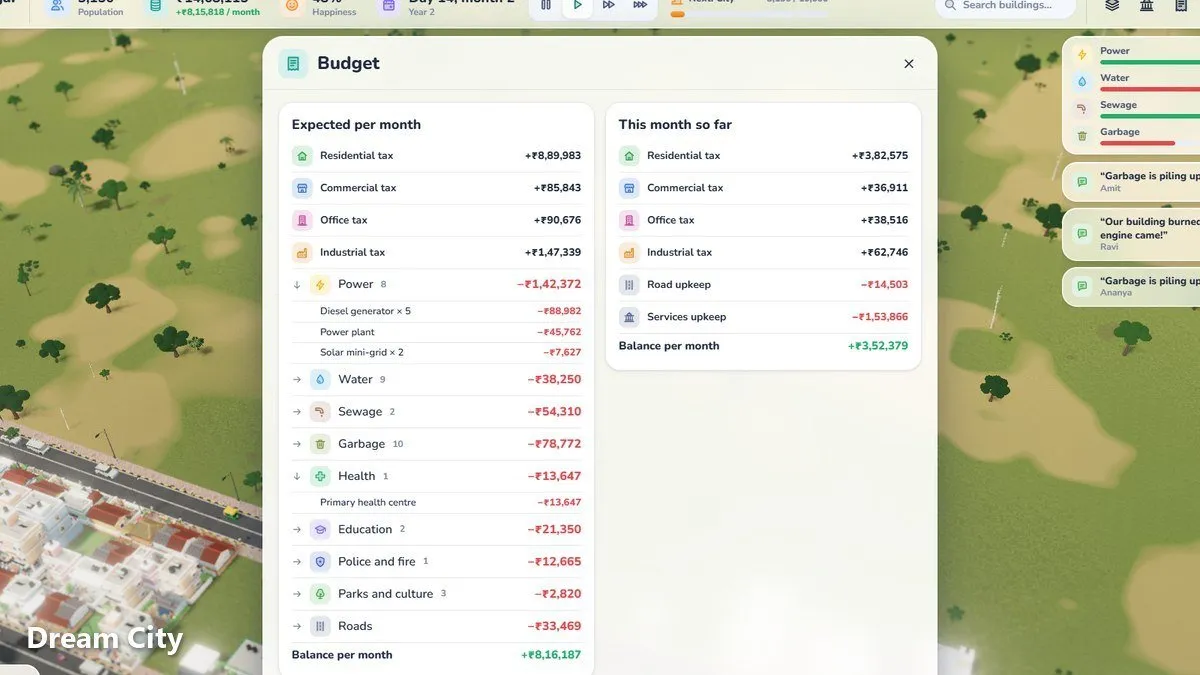
A beautiful city that’s losing money won’t stay beautiful for long. In Career mode, Omebly Dream City asks you to pay for every road, building and service, and to earn that money back through tax. This Dream City budget guide explains how the money works and gives you a practical plan to stay in profit from Settlement to Metropolis.
For a broader look at the game, read our main Dream City guide. If you’re not sure which mode to play, see Career vs Sandbox, because the budget only matters in Career. Sandbox gives you unlimited money.
Quick answer: Most tax comes from people with jobs and businesses with filled jobs, so keep jobs and workers balanced using the Jobs panel. Hold tax at or below 12%: above that happiness drops, and above 22% people leave. Check the Budget before every purchase, remember that services cost more as they get busier and wages rise as the town grows, and prefer buildings with low running costs, such as solar, once you can afford them.
How money works in Dream City
Dream City’s economy is simple to understand but takes skill to master. Here are the rules.
Income: tax from jobs
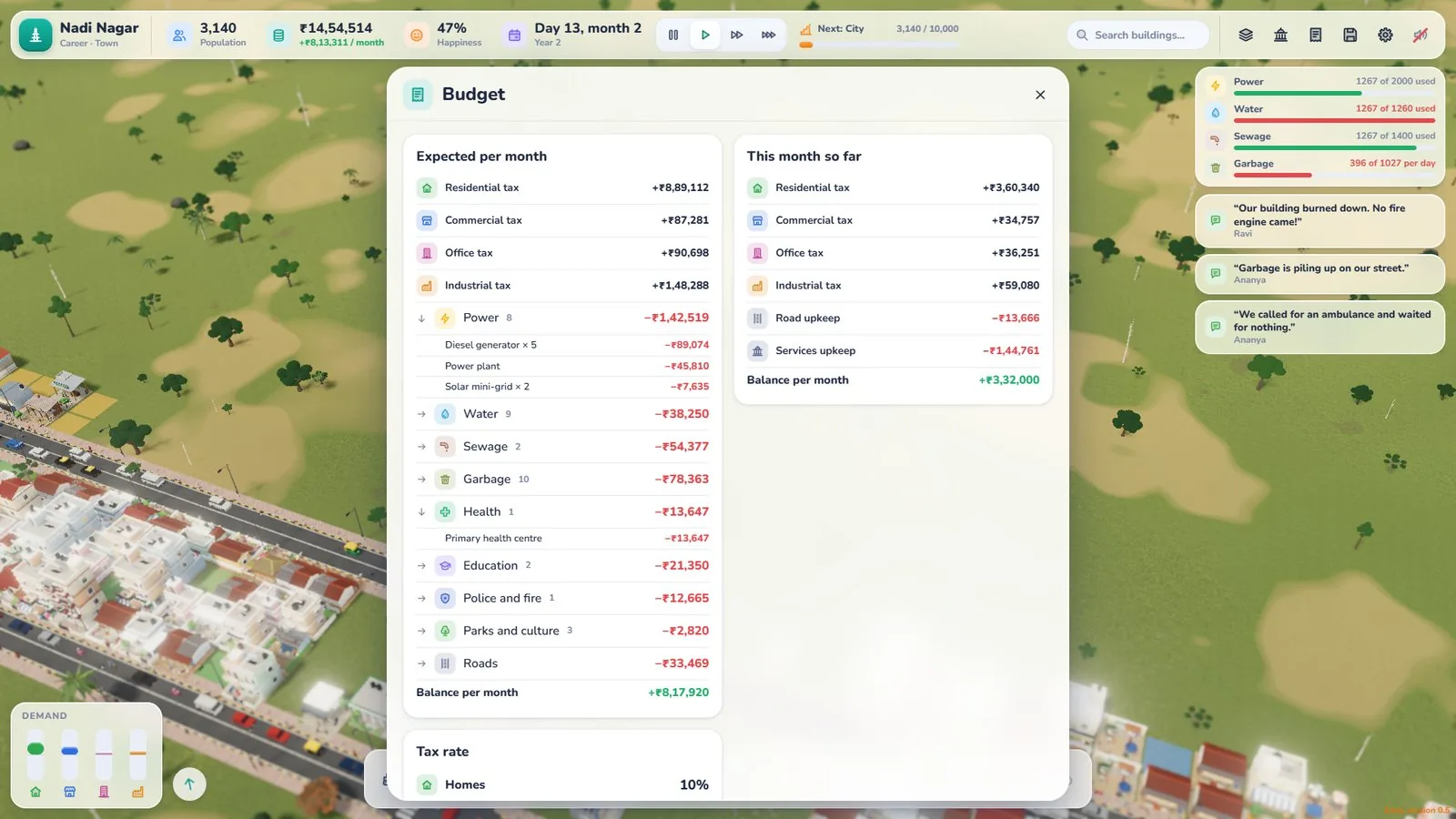
Homes pay a small house tax, but most income comes from residents with jobs and from businesses on the jobs they fill. That rule shapes everything. A city with lots of homes and few jobs looks busy but earns little. Jobs are where your income really comes from.
Costs: building and running
Every building has a running cost. The Budget groups your monthly costs by department, and each group shows every kind of building, how many you have and what they cost. Tap a line and the camera flies to that building. On top of that:
- Services cost more as they get busier. A clinic serving a few people costs less than one serving a crowd.
- Wages rise as the town grows. A big city pays more to run than a small one.
The result
A careful city stays profitable, while a careless one struggles. The difference is usually planning, not luck.
Tax: the 12% and 22% limits
Tax is your main lever, but residents notice when you pull it.
| Tax rate | What happens |
|---|---|
| Up to 12% | Feels fair to residents |
| Above 12% | Happiness drops |
| Above 22% | People leave |
Why not just raise tax?
Raising tax above 12% brings in more money per worker for a while, but happiness falls. Push past 22% and people leave, which means fewer workers, less tax and empty homes. It’s a trap. Fix the cause of the shortfall instead.
A sensible approach
- Set tax at or just under 12% early on.
- Leave it there while you grow.
- Only lower it if you’re comfortably in profit and want happier residents.
Jobs: the engine of your economy
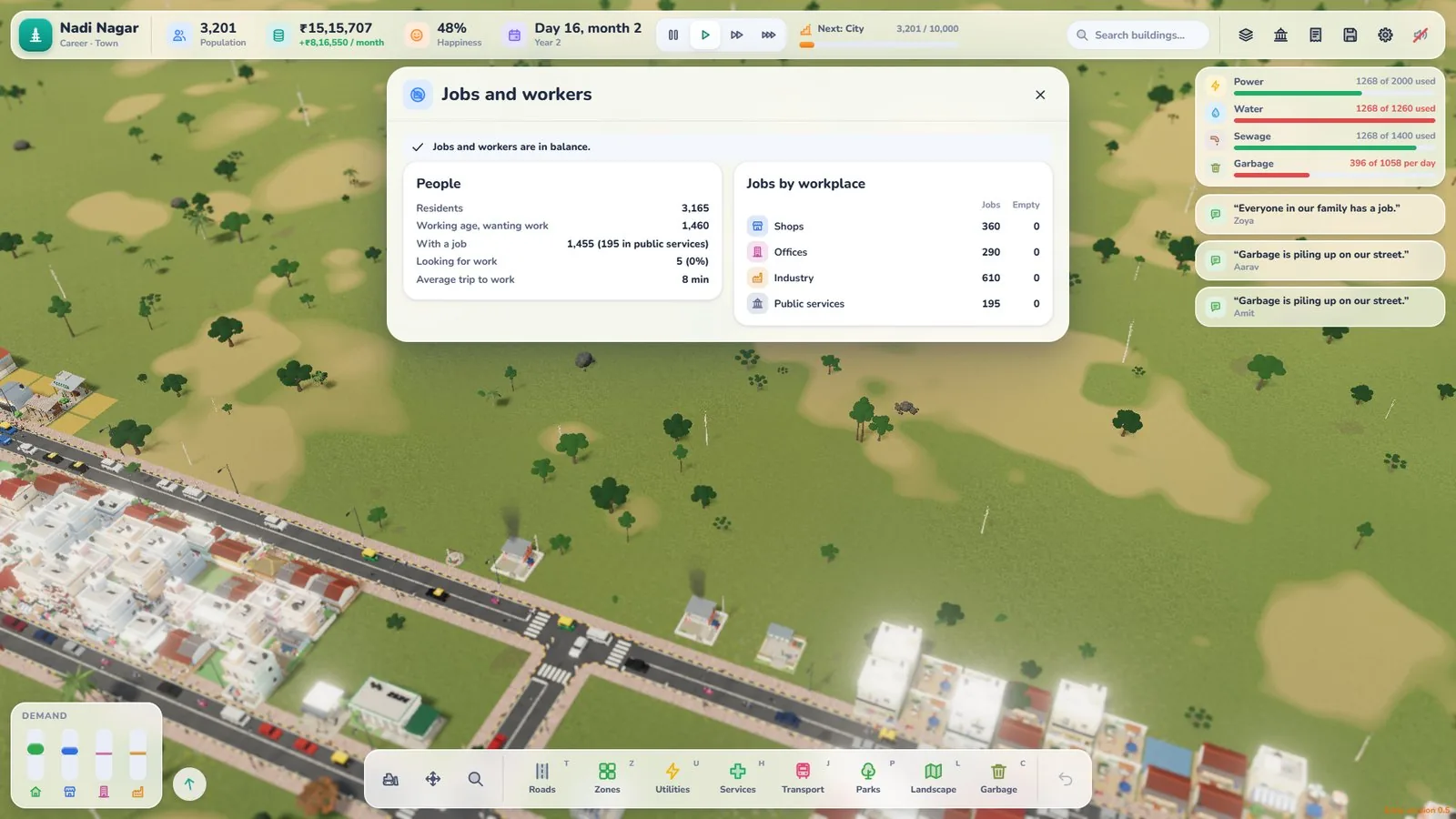
The Jobs panel shows the balance between jobs and workers. Happiness follows that balance, and so does your income.
Too many workers
People without jobs pay little tax and aren’t happy. Zone more work.
Too many jobs
Workplaces sit empty. Zone more homes so people can fill them.
Keep checking
Every time you add a block of homes or work, check the panel again. Small, balanced steps keep income steady.
Upkeep: choose low running costs
Running costs add up quietly. The power choice at Settlement stage shows the trade-off clearly.
| Diesel generator | Solar mini-grid | |
|---|---|---|
| Build cost | Cheap | Higher |
| Running cost | Higher | Very low |
| Pollution | Yes | None |
How to decide
- Short on cash today? Diesel gets the power on.
- Planning for the long run? Solar’s very low upkeep saves money over time, and it doesn’t pollute.
A common strategy is to start with whatever you can afford, then move to solar once the city is earning steadily. Pollution drifts with the wind, which is another reason to think hard about diesel.
Services: build when needed, not before
Dream City has a rich set of services: Anganwadi, PHC, CHC, clinics, hospitals, ambulances, schools, a college, a university, a medical college, police, fire, places of worship, parks, a ration shop, an ATM and a mandi. They make people’s lives better, but they cost money, and they cost more as they get busier.
Budget-friendly service tips
- Add services when people need them, not all at once.
- Place them near homes so they serve people well.
- Spread them across neighbourhoods rather than overloading one building.
- Check the Budget after each one to see how costs change.
Roads and land: spend with purpose
Roads cost money too. Build the road your traffic needs today. A young settlement doesn’t need a 6-lane boulevard.
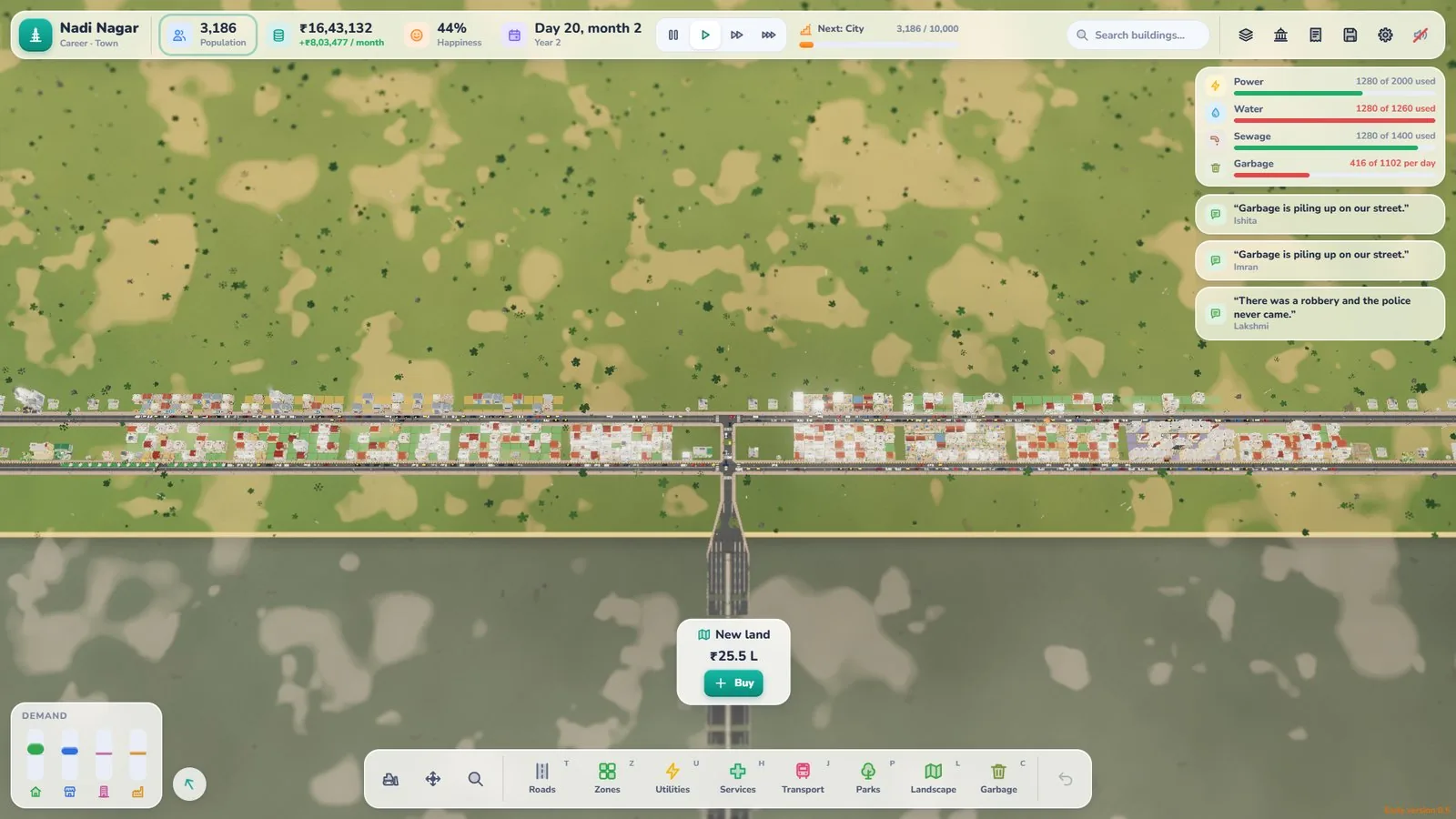
In Career mode you can buy more land as you earn, up to a 5×5 map. New land is exciting, but only buy it when your current plot is filling up and you know what the new space is for.
A step-by-step routine for staying in profit
Use this routine every few minutes of play:
- Open the Budget. Are you earning more than you spend?
- Open the Jobs panel. Are jobs and workers balanced?
- Check tax. Is it at or below 12%?
- Look for expensive running costs. Could anything be replaced with a cheaper-to-run option?
- Listen to residents. They speak their mind, and unhappy people often point to the problem.
- Then build. Only spend when the first five checks look good.
What to do when you’re losing money
Don’t panic, and don’t jump to a high tax rate. Work through this list:
- Unemployment? Zone more work so people and businesses pay tax.
- Empty workplaces? Zone more homes.
- Busy, expensive services? Spread the load or wait before adding more.
- High running costs? Plan a move to lower-upkeep options like solar.
- Over-built roads? Avoid adding more until income catches up.
- Stopped growing? Check happiness, tax and the jobs balance.
Common budget mistakes
- Raising tax above 12% to fix a shortfall
- Zoning homes without jobs
- Building every service as soon as it unlocks
- Ignoring running costs when choosing buildings
- Buying land before you need it
Your budget checklist
- Tax at or below 12%
- Jobs panel balanced
- Budget checked before each purchase
- Low-upkeep buildings where possible
- Services added as needed
- Land bought with a plan
For stage-by-stage growth advice, our guide to growing a Hamlet into a Village puts these money habits into practice.
Open Dream City, check your Budget and keep your city in profit.
Frequently asked questions
What is the best tax rate in Dream City?
Up to 12% feels fair to residents. Above 12% happiness drops, and above 22% people leave. Most cities do well at or just under 12%.
Why is my city losing money?
Common causes are too few jobs (most tax comes from people with jobs and businesses with filled jobs), busy services costing more, rising wages as the town grows, and expensive running costs such as diesel power.
Do people pay tax if they don't have a job?
Homes pay only a small house tax. The real income comes from residents with jobs and from businesses filling their jobs, which is why the Jobs panel matters.
Is solar cheaper than diesel?
Diesel is cheaper to build but costs more to run and pollutes. Solar costs more to build but has very low upkeep and makes no pollution.
Does money matter in Sandbox mode?
No. Sandbox gives you unlimited money. The budget challenge is part of Career mode.

Written by
Nazmul Hussain, Managing Director & Technical Head, Omebly. 10+ years building websites and apps for clients in India, the Gulf, the UK and the US, and mentoring at Omebly Academy. LinkedIn · GitHub
Follow Omebly
New guides, work and launches on every channel.