


Startups before their first brand
A positioning that guides the name, logo, website and pitch from day one.
Omebly PDF Tools
Edit PDFRotate PDFHeader and footerBates numberingResize PDFEdit metadataPDF bookmarksAdd page numbersAdd watermarkCrop PDFCreate PDF formFill PDF formsMerge PDFSplit PDFRemove pagesExtract pagesOrganise PDFPages per sheetScan to PDFBatch PDFCompress PDFGrayscale PDFOptimise for webRemove commentsRepair PDFOCR PDFJPG to PDFPNG to PDFText to PDFMarkdown to PDFEPUB to PDFWord to PDFPowerPoint to PDFExcel to PDFHTML to PDFPDF to JPGPDF to PNGPDF to TextExtract imagesPDF to EPUBPDF to WordPDF to PowerPointPDF to ExcelPDF to PDF/AUnlock PDFProtect PDFSign PDFFlatten PDFRedact PDFCompare PDFAI SummarizerTranslate PDFChat with PDFPDF to MarkdownA clear, written position that says who you serve, why you are different and how to talk about it.
From $2,000 one-time
A positioning that guides the name, logo, website and pitch from day one.
A sharper reason to choose you, based on what customers and competitors actually say.
A view of the local competitor landscape and how to stand apart in it, for example in the UAE or UK.
Your main competitors mapped by price, promise, audience and tone, showing where the gaps are.
Two to four buyer profiles with their needs, objections and the words they use.
One clear statement of what you offer, for whom and why it is better for them.
Why the business exists and what customers can always expect, in plain words.
A defined character for the brand that guides visual and verbal choices.
The internal one-paragraph summary every later decision is checked against.
A short presentation your team, designers and partners can work from.
Most branding problems are not design problems. A logo looks generic because nobody decided what made the business different. A website sounds like every competitor because nobody wrote down who it is really for. As a brand strategy agency, Omebly does that thinking first: we study your market and customers, then agree a clear position with you before any design work begins.
The result is a short set of decisions on paper: who your customers are, what you promise them, why you are a better choice than the alternatives and what personality the brand should have. Designers, copywriters, marketers and new hires can all work from it. Brand strategy is the first stage of our brand building service, and it can also be bought on its own.
Common signs that strategy should come before design:
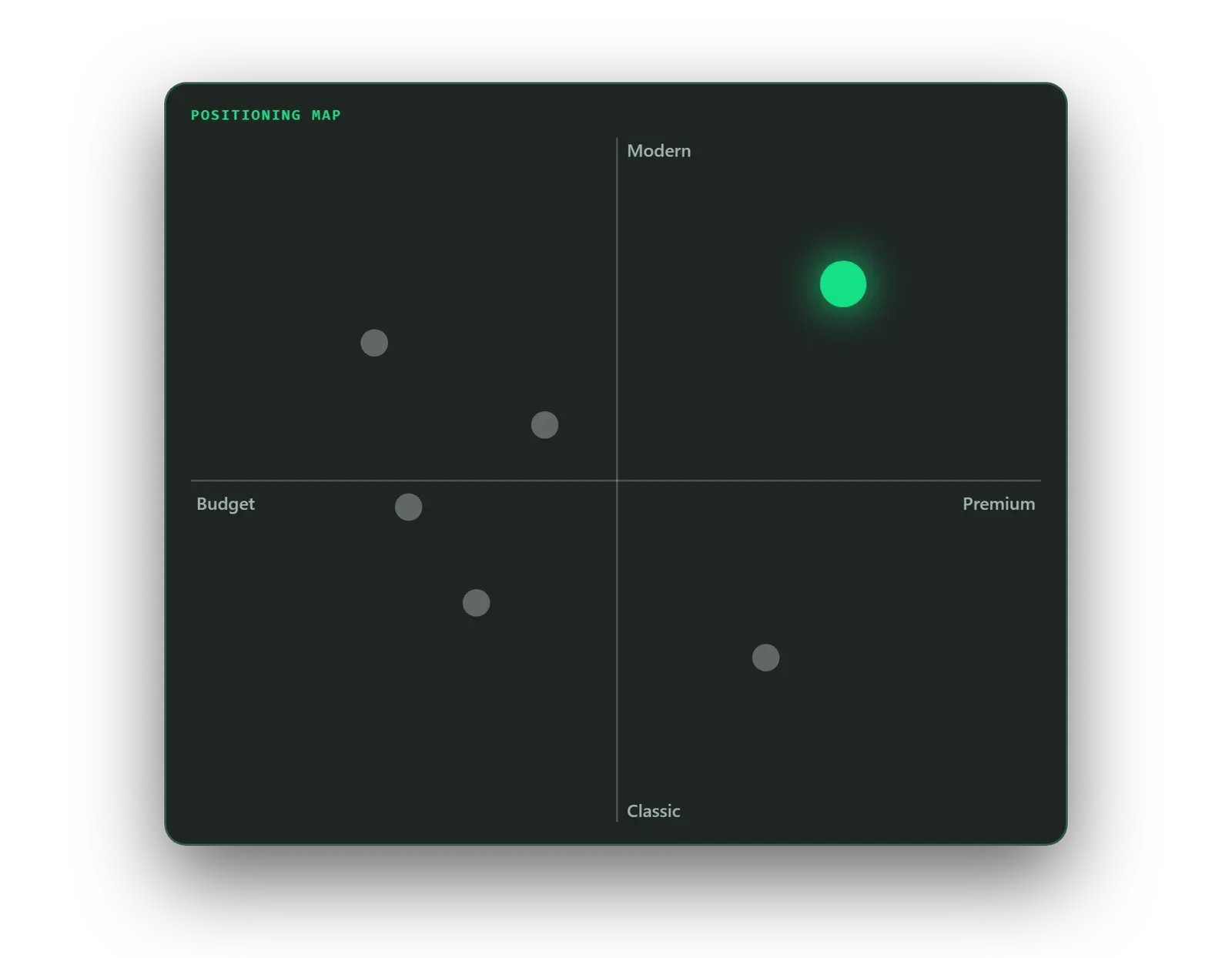
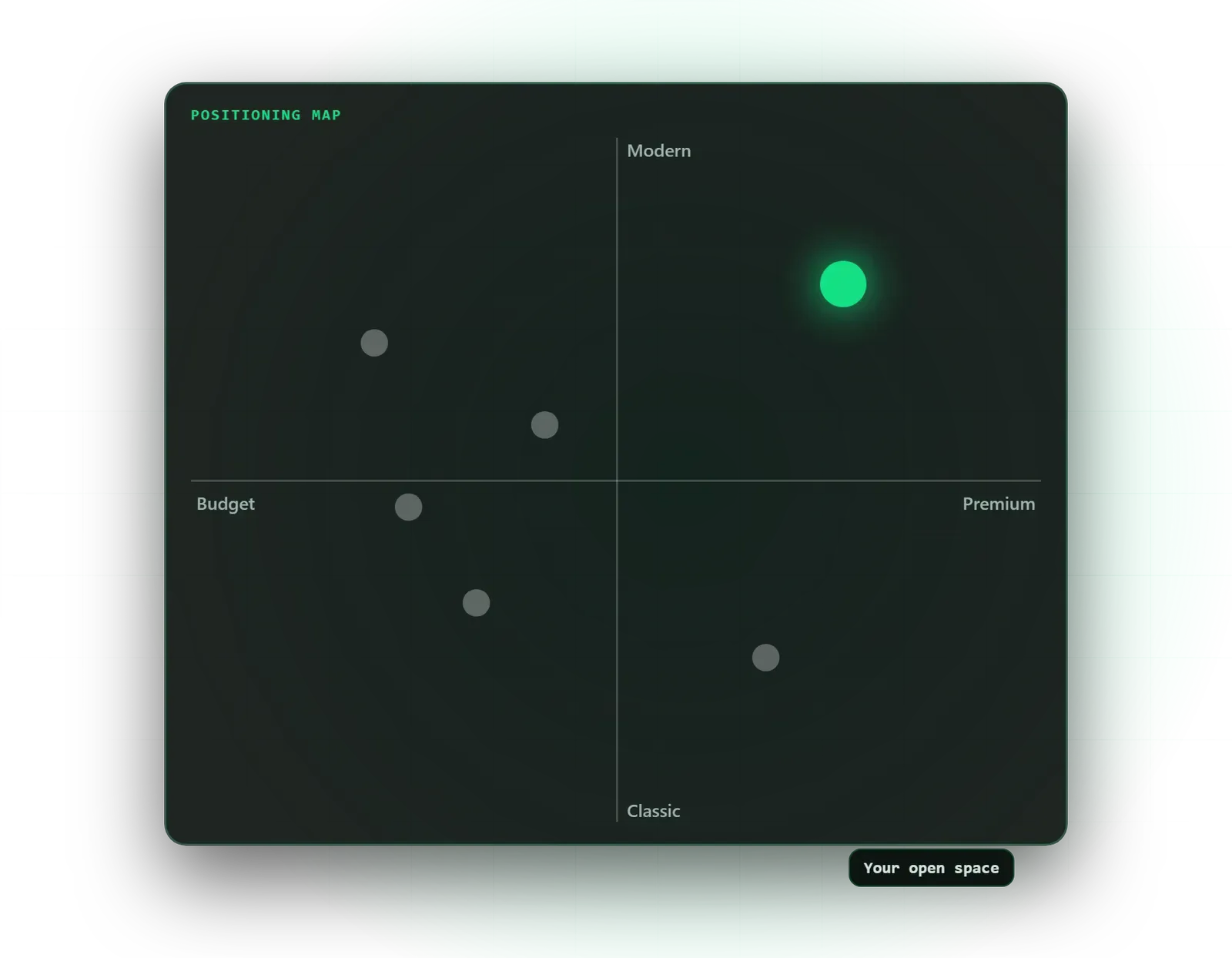
A competitor landscape matrix. We review your main competitors’ websites, social channels, ads, reviews and pricing, then map them against the things buyers care about, such as price level, speed, specialism or style. The matrix shows where the market is crowded and where there is room. It is often the moment a team sees why their current brand blends in.
Two to four profiles of the people who buy from you, built from interviews, surveys, reviews or your sales team’s experience. Each persona covers what the person needs, what worries them before buying and, importantly, the words they use. Those words later feed into your brand messaging.
One clear statement of what you offer, who it is for and why it is better for them than the alternative. We test several versions in the workshop and keep the one that is both true and distinctive.
Why the business exists and what customers can always rely on. We keep these short and specific, so they are useful in real decisions rather than framed on a wall.
A defined character for the brand, described in practical terms: how it looks, how it speaks and what it would never do.
Everything brought together in a short presentation that your team and any future agency can use.
Evidence before opinions. Workshops are more productive when they start from facts. We bring the competitor matrix and customer findings into the room, so discussions are about what customers value, not personal preferences.
The hardest part of positioning is deciding who you are not for and which strengths you will not lead with. A brand that tries to stand for everything ends up standing for nothing. We help you make those choices and explain the trade-offs.
A position only works if the business can deliver it. If your value proposition promises speed, your operations need to be fast. We check each claim against what you actually do today, and flag anything that needs to change in the business before it goes into marketing.
Buyers in Dubai, Kolkata and London often compare different competitors and respond to different cues. When you sell in more than one market, we note where the positioning holds everywhere and where the messages should shift.
Strategy should make design and writing easier. We finish with a hand-over that turns the strategy into a clear brief for a logo design, website or campaign, whether Omebly does that work or another team does.
We do not quote a standard timeline, because scope varies. Your fixed written quote sets the milestones after the free consultation. The main factors are:
Starting prices for brand projects are shown on the parent service page.
Every project is led by our founder, Nazmul Hussain, who has 10+ years building websites, apps and digital products, so the strategy is shaped by how brands are actually used on screens, in stores and in sales conversations. You get a fixed written quote within 48 hours, weekly reviews and milestone payments released only after you have seen each stage. Once fully paid, the strategy documents and designs we create are yours, and an NDA is available on request, which matters when you share plans and numbers in a workshop.
Want a clearer position before you design? Message us on WhatsApp at +91 70444 33991 or book a free consultation.
Your goals, customers, competitors and budget discussed, then a fixed written quote.
Competitor review, customer conversations or survey and a look at reviews, sites and ads in your market.
A working session with you and key team members to test findings and make choices.
Value proposition, personas, archetype and positioning presented in a weekly review.
Revisions, the final strategy deck and a hand-over call for whoever designs next.
From $2,000 one-time. Every project gets a fixed written quote after a free consultation, with milestone payments.
From $2,000
Fixed quote
Fixed quote
| Omebly | Going straight to a logo designer | |
|---|---|---|
| Starting point | Customers, competitors and your goals | Personal taste and mood boards |
| How designs are judged | Against a written positioning | Whether people like it |
| Difference from rivals | Checked against a competitor matrix | Often looks like the category |
| Use beyond the logo | Guides website copy, ads, hiring and pitches | Stops at the visual files |
| Team alignment | Agreed in a workshop and written down | Lives in the founder's head |
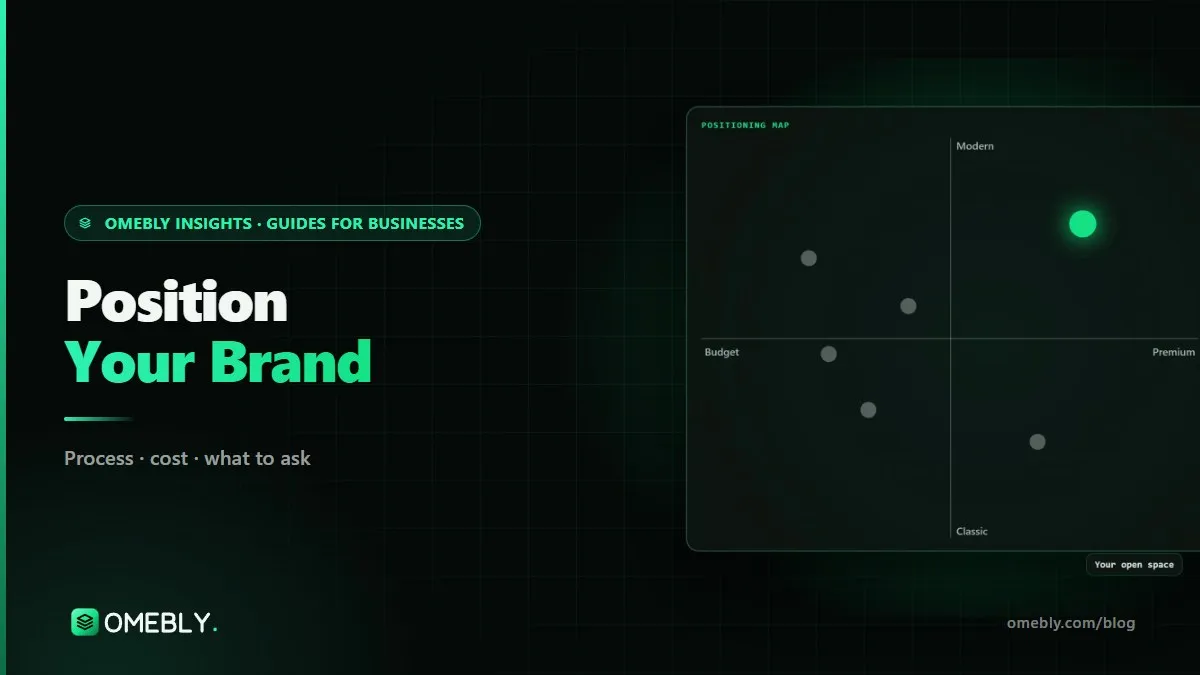
Most brands sound alike because they copy the category. Here's a practical method to map competitors, spot the gaps customers care about and choose a position you can actually own.
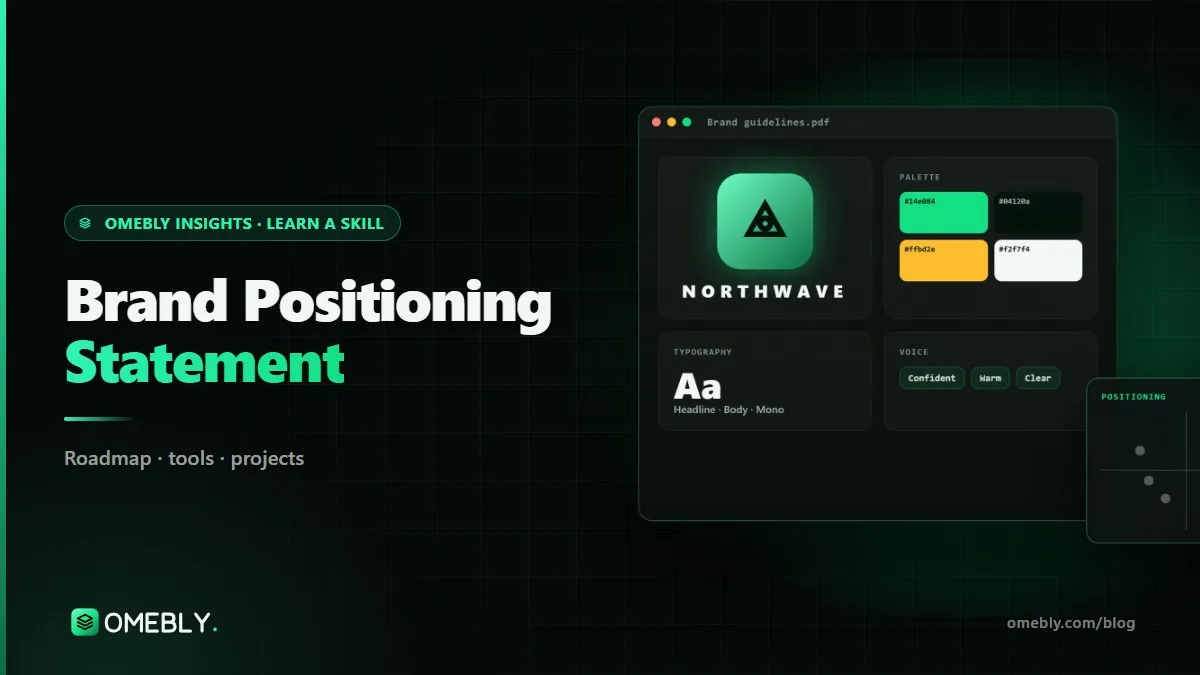
A brand positioning statement is a one-paragraph internal promise: who you serve, what you offer and why you're different. Here's a template, examples and how to test yours.
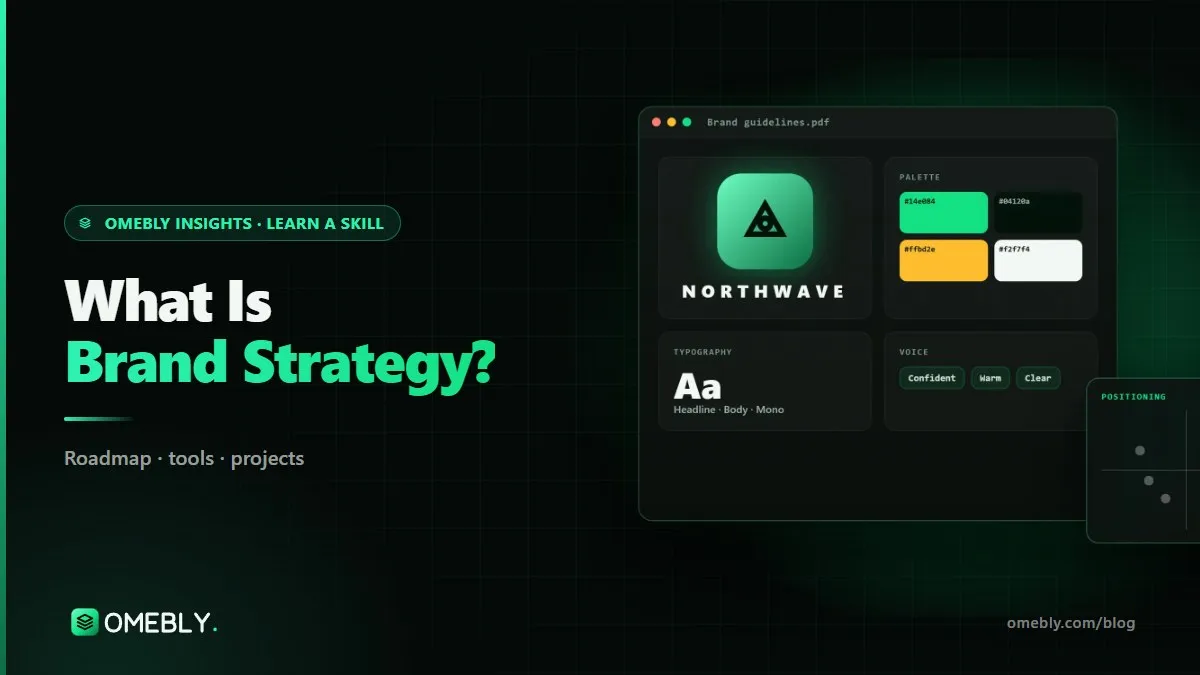
A beginner's guide to brand strategy: what it is, how positioning, identity and voice fit together, and a practical plan to learn it with real projects.
Strategy is the thinking: who you serve, what you promise, how you differ and what personality the brand has. Identity is how that is expressed: logo, colours, type, imagery and layouts. Strategy comes first because it gives the designer a brief to work against, and it gives you a fair way to judge the designs.
Usually a lighter version, yes. Even a small business benefits from knowing exactly who it is for and why customers choose it. A positioning sprint focuses on the competitor matrix, a workshop and a clear value proposition, without the full research programme. It often makes later design and marketing decisions much quicker.
In the full strategy, yes, with your permission. We run short interviews or a survey with existing or potential customers, because the words they use often differ from the words a business uses about itself. If direct contact is not possible, we study reviews, support questions, sales calls and competitor feedback instead.
The founder or managing director, plus one or two people who talk to customers every day, such as sales or customer service. Keeping the group small makes decisions easier. We send a short pre-workshop questionnaire so everyone arrives having thought about customers, competitors and what makes the business different.
An archetype is a well-known character type, such as the Sage, the Hero or the Caregiver, used as a shorthand for personality. It helps designers and writers make consistent choices. It is a tool rather than a rule: we use it to describe your brand's character, then translate it into specific visual and verbal guidance.
Yes. We review the competitors, customer expectations and buying habits in the new market, such as the UAE, UK or India, using desk research and, where possible, conversations with local customers. The positioning then reflects that market, not the one you are used to. Local legal and regulatory advice stays with your advisers.
Tell us what you have in mind. You get a free consultation and a fixed quote within 48 hours.
Prefer email? info@omebly.com