Services in Dream City: Anganwadi, PHC, Schools and Police
From the first Anganwadi to a medical college, Dream City's services feel familiar. This guide walks through health, education, safety, community and everyday services, and how to place them well.
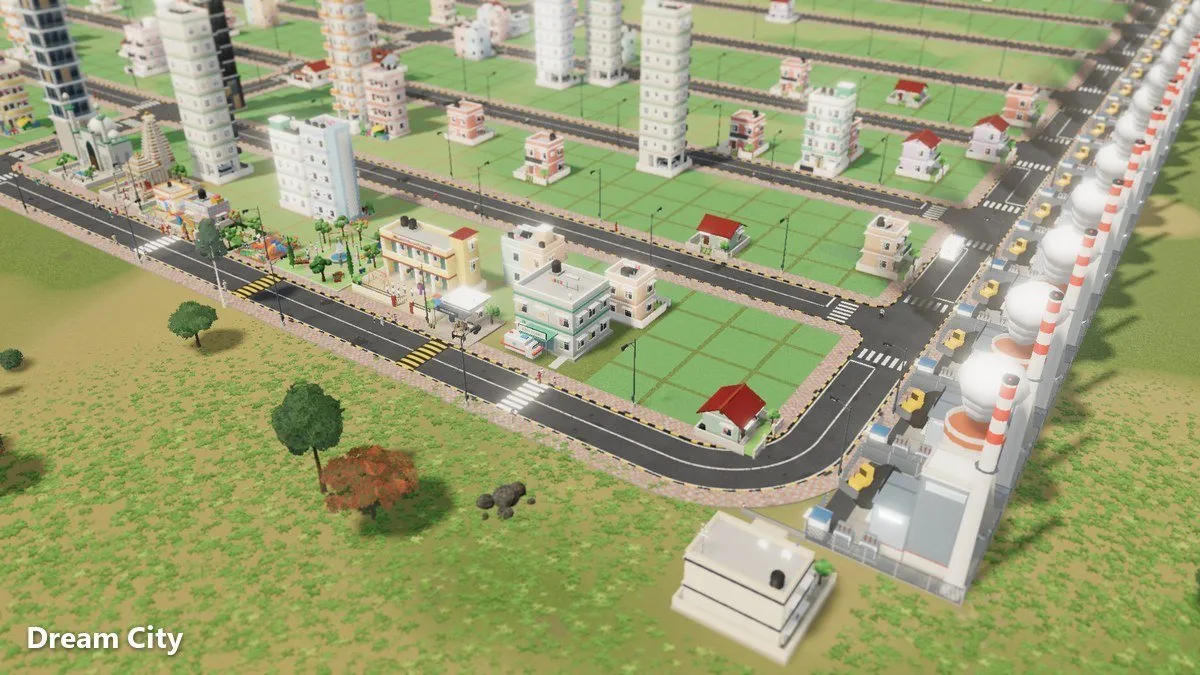
A town is more than homes and roads. People need somewhere to get care, learn, feel safe and buy their everyday essentials. Omebly Dream City fills that need with services that feel familiar, from an Anganwadi and a PHC to schools, police stations and the local mandi. This Dream City services guide explains each group and how to place it well.
For a full introduction to the game, see the main Dream City guide. If you’re in the early stages, our Hamlet to Village guide shows where services fit into growth.
Quick answer: Dream City’s services cover health (PHC, clinic, CHC, hospital, district hospital, ambulance station, medical college), education (Anganwadi, nursery, primary and high schools, college, university), safety (police and fire), community (places of worship and parks) and everyday needs (ration shop, ATM, mandi). Add each as it becomes available and as people need it, place it close to homes, and spread services across neighbourhoods. Services cost more as they get busier, so check the Budget after each one.
How services work
Each growth stage unlocks new buildings, so your service options grow as your city does: Settlement, Hamlet (100), Village (500), Town (2,500), City (10,000) and Metropolis (50,000). You won’t have everything at the start, and that’s by design. Add services as they become available.
Two rules shape every service decision in Career mode:
- Services cost more as they get busier.
- Wages rise as the town grows.
Short tips appear the first time you open each menu, so take a moment to read them when you open a new service menu.
When each service unlocks
| Stage | Services that unlock |
|---|---|
| Settlement | Anganwadi, PHC, parks, gardens, playgrounds, village pond |
| Hamlet | Clinic, police post, fire station, nursery, primary school, temple, mosque, church, ration shop |
| Village | Ambulance station, police station, high school |
| Town | Hospital, CHC, ATM, mandi |
| City | District hospital, college |
| Metropolis | Medical college, university |
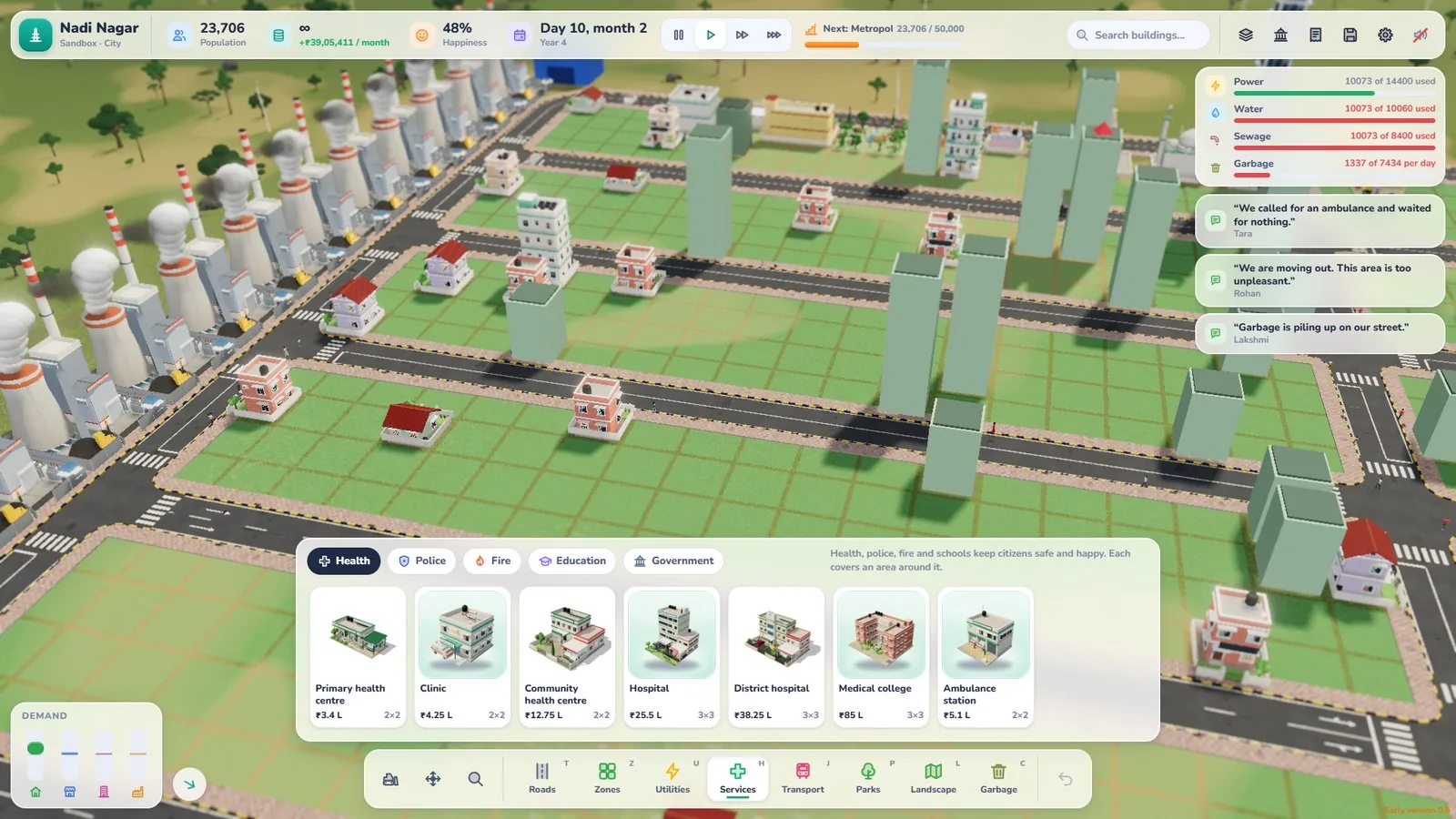
Health
| Service | Where it fits |
|---|---|
| PHC | Primary health care for a growing community |
| CHC | A bigger community health centre |
| Clinic | Everyday care in town neighbourhoods |
| Hospital | Major care for a larger city |
| District hospital | Big-city care (City stage) |
| Medical college | Top-level care and training (Metropolis stage) |
| Ambulance station | Sends ambulances along your roads when accidents happen |
Health placement tips
- Start local. A PHC near homes serves people where they live, and an Anganwadi gives young children early learning.
- Grow upwards. As bigger health buildings become available, place them where several neighbourhoods can reach them.
- Keep roads clear. Accidents bring ambulances from the nearest ambulance station, and traffic slows them down.
- Spread the load. A single busy health building costs more than several sensibly placed ones.
Education
Dream City’s education ladder runs from an Anganwadi and nursery to primary and high schools, then a college and a university. The medical college is listed under Health.
| Service | Where it fits |
|---|---|
| Anganwadi | Childcare and early learning close to homes |
| Nursery | Early years before primary school |
| Primary school | Local schooling for young children |
| High school | Schooling for older children |
| College | Higher education for a big city |
| University | The top of the ladder, for a Metropolis |
Education placement tips
- Schools near homes. Children shouldn’t have to cross the whole town.
- Safe crossings. Put a zebra crossing, foot overbridge or subway where a busy road separates homes from a school, and consider speed breakers on nearby streets.
- Higher education on good routes. A college or university draws people from across the city, so place it on a main road with a bus stop nearby.
- Plan space. Bigger campuses need room, so leave land free as your city grows.
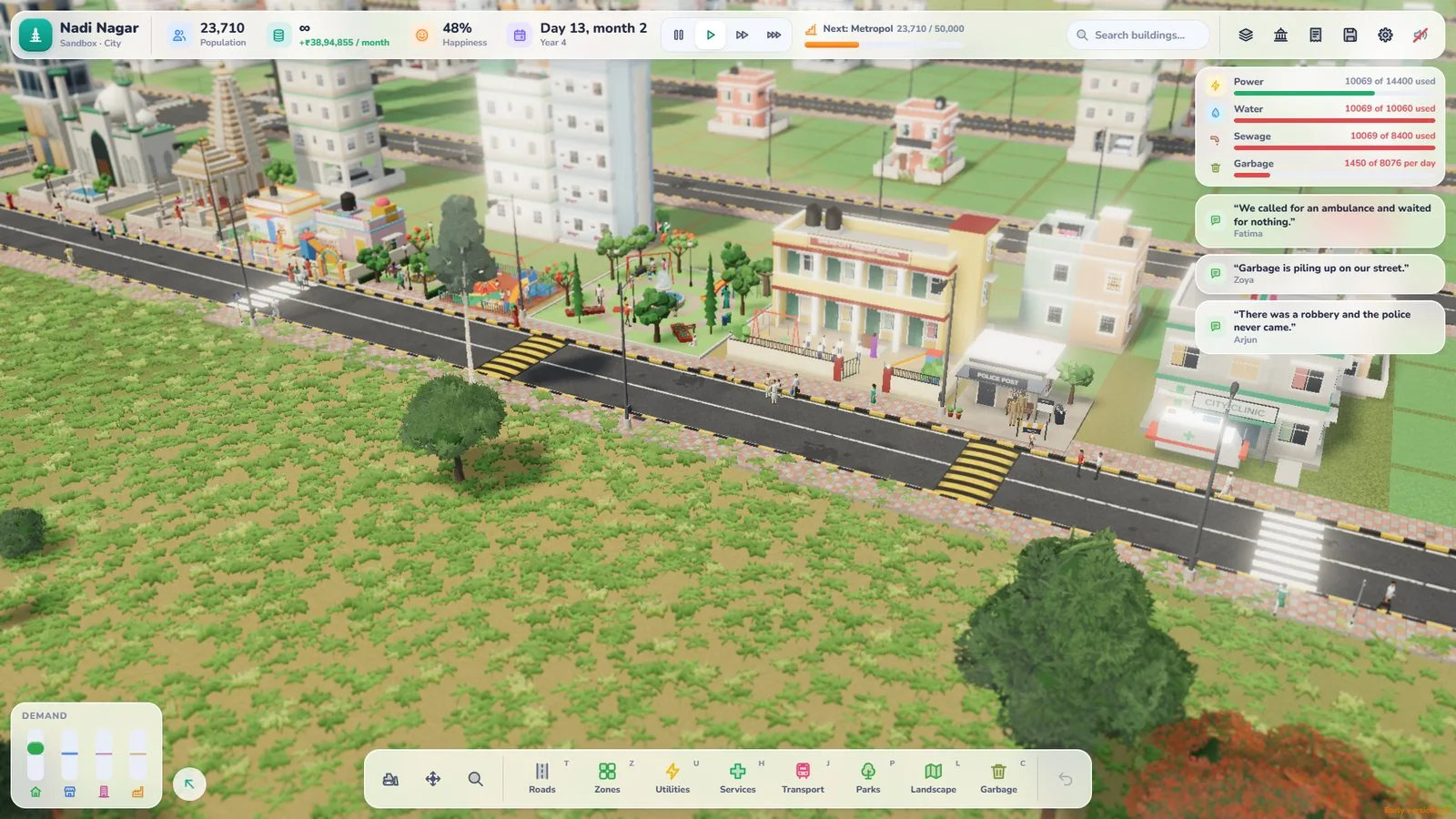
Safety: police and fire
Police and fire stations protect your residents.
Safety placement tips
- Cover neighbourhoods evenly rather than clustering stations in one place.
- Use main roads so they can reach different parts of town.
- Add more as you expand, especially when you open new land in Career mode.
Community: places of worship and parks
Places of worship and parks give neighbourhoods a heart.
Community tips
- Parks between blocks break up dense housing.
- Places of worship make great landmarks at the end of a street or beside a pond.
- Combine them with terrain: a park by a river or a temple on a hill looks wonderful at street level.
Everyday services: ration shop, ATM and mandi
These are the places people visit all the time.
- Ration shop: close to homes, so people can reach it easily.
- ATM: near shops and busy streets.
- Mandi: a market where people gather. Give it good road access and a safe way for pedestrians to cross.
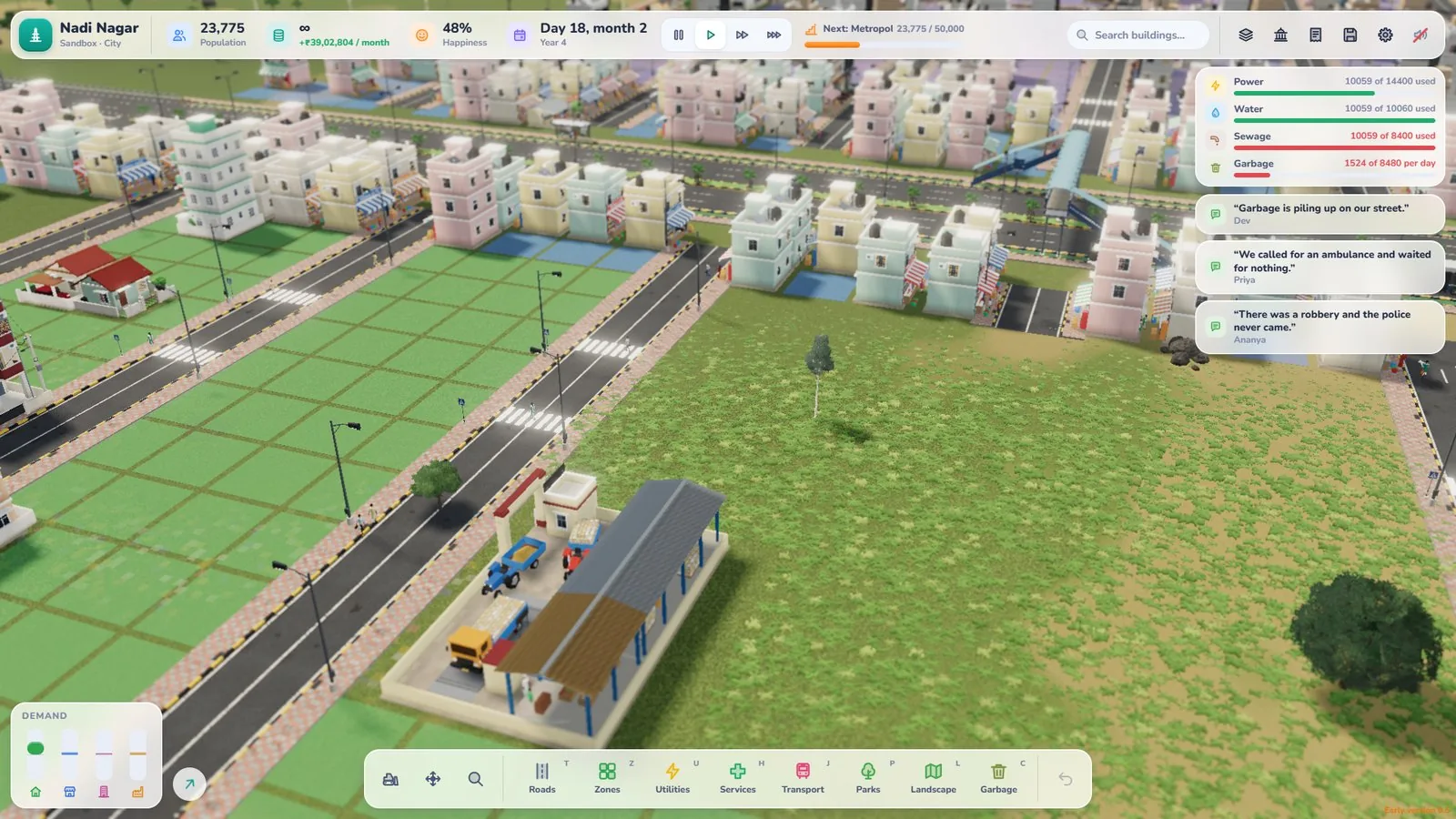
A step-by-step service plan
Step 1: Check the Budget
Before adding any service in Career mode, open the Budget and make sure you can afford the running cost.
Step 2: Look at where people live
Services work best near homes. Look at your densest neighbourhoods first.
Step 3: Add the basics first
Start with what’s available and most needed locally, such as early health and education.
Step 4: Spread, don’t stack
Put the next service in a different neighbourhood instead of beside the first.
Step 5: Listen to residents
Residents speak their mind. Follow a resident’s day to see how far they travel for school, care or shopping.
Step 6: Review the Budget again
Services cost more as they get busier. If one department’s costs jump, spread the load.
Reading service costs in the Budget
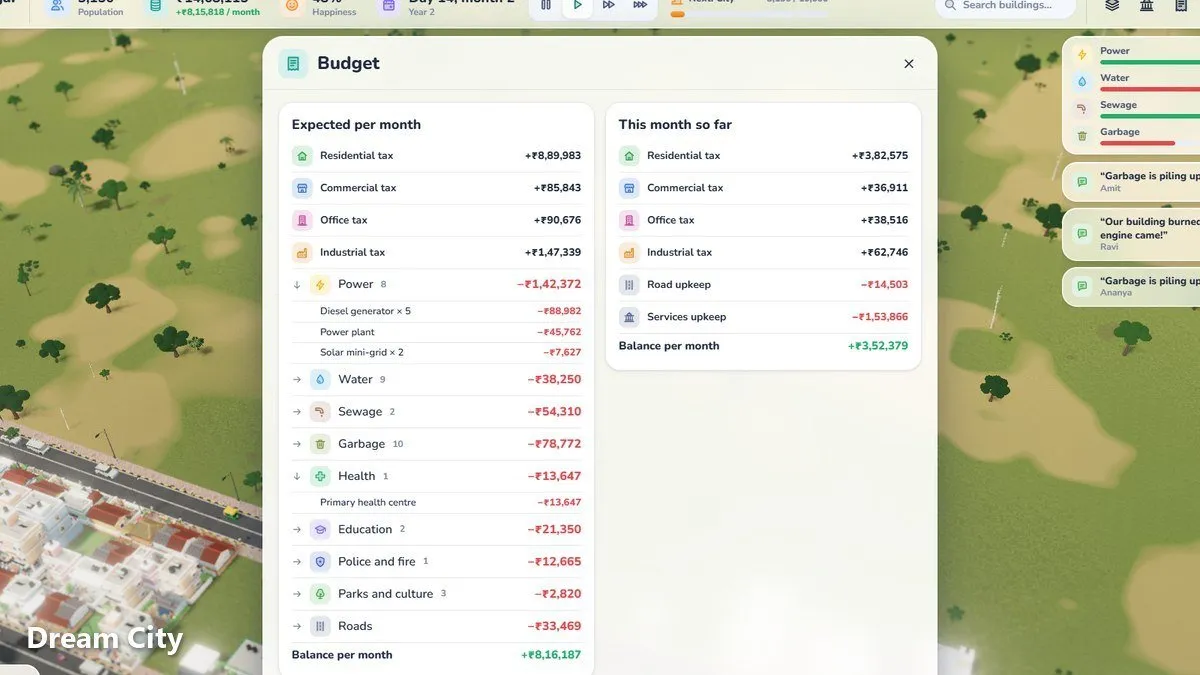
The Budget groups monthly costs by department: health, education, police and fire, parks and culture, and more. Each group shows every kind of building, how many you have and what they cost. The ration shop, ATM and mandi appear under Administration. Tap a line and the camera flies to it.
What to look for
- One expensive line: a service that’s very busy. Consider adding another in a different area.
- A department rising fast: your town is growing, and wages are rising with it. Make sure tax income keeps pace.
Services and tax
When services get expensive, it’s tempting to raise tax. Up to 12% feels fair; above 12% happiness drops, and above 22% people leave. Keep the Jobs panel balanced instead, since most income comes from residents with jobs and businesses filling their jobs.
Common service mistakes
- Building every service the moment it becomes available
- Clustering all services in one neighbourhood
- Schools across busy roads with no safe crossing
- Ignoring rising costs in the Budget
- Raising tax to pay for over-built services
Your services checklist
- Services added as they become available and needed
- Placed close to homes
- Spread across neighbourhoods
- Safe crossings near schools and markets
- Budget checked before and after each one
For more on keeping costs under control, see our budget guide.
Open Dream City and give your residents the services they need.
Frequently asked questions
What services are in Dream City?
Health (PHC, clinic, CHC, hospital, district hospital, ambulance station and medical college), education (Anganwadi, nursery, primary and high schools, college and university), safety (police and fire), community (places of worship and parks) and everyday services (ration shop, ATM and mandi).
When do new services unlock?
Each growth stage unlocks new buildings, so services appear as your settlement grows through Hamlet, Village, Town, City and Metropolis. Add them as they become available.
Why are my services getting more expensive?
Services cost more as they get busier, and wages rise as the town grows. Spreading services across neighbourhoods helps.
Do ambulances really drive to accidents?
Yes. People and vehicles move around your city, and accidents bring ambulances. Emergency vehicles drive your roads from the nearest station, and traffic slows them down.
Where can I see what my services cost?
The Budget groups monthly costs by department, including health, education, police and fire, and parks and culture. Tap a line to fly the camera to that building.

Written by
Nazmul Hussain, Managing Director & Technical Head, Omebly. 10+ years building websites and apps for clients in India, the Gulf, the UK and the US, and mentoring at Omebly Academy. LinkedIn · GitHub
Follow Omebly
New guides, work and launches on every channel.